When a storm lantern smokes or soots, it is usually due to a few easily remedied causes. The wick is often set too high, the fuel is unsuitable, or the burner is dirty. An unevenly trimmed wick can also cause the flame to burn erratically and leave black soot on the glass.
The good news: In most cases, your storm lantern is not defective. With a few simple adjustments, the flame can be set to burn steadily and evenly again. In this guide, you will learn why a storm lantern smokes, what you can do immediately, and how to prevent soot buildup in the future.
Table of contents
Why does a storm lantern smoke?
Quick help: What to do if your storm lantern smokes
The most common causes when a storm lantern smokes
Smoke or soot: What is the difference?
Is smoke from a storm lantern dangerous?
How to prevent your storm lantern from smoking
When should the wick be replaced?
Conclusion: If the storm lantern is smoking, the cause is usually the wick, fuel, or maintenance
Frequently asked questions: Storm lantern smoking
Why does a storm lantern smoke?
A storm lantern smokes when the fuel does not burn cleanly at the flame. For combustion to work evenly, the fuel, wick, air supply, and burner must work together. If one of these factors is not optimal, smoke may occur.
This happens particularly often when the wick has been turned up too far. Too much fuel is then carried to the flame. The flame becomes too large, burns unevenly, and starts to soot. A dirty burner or unsuitable oil can also disrupt combustion.
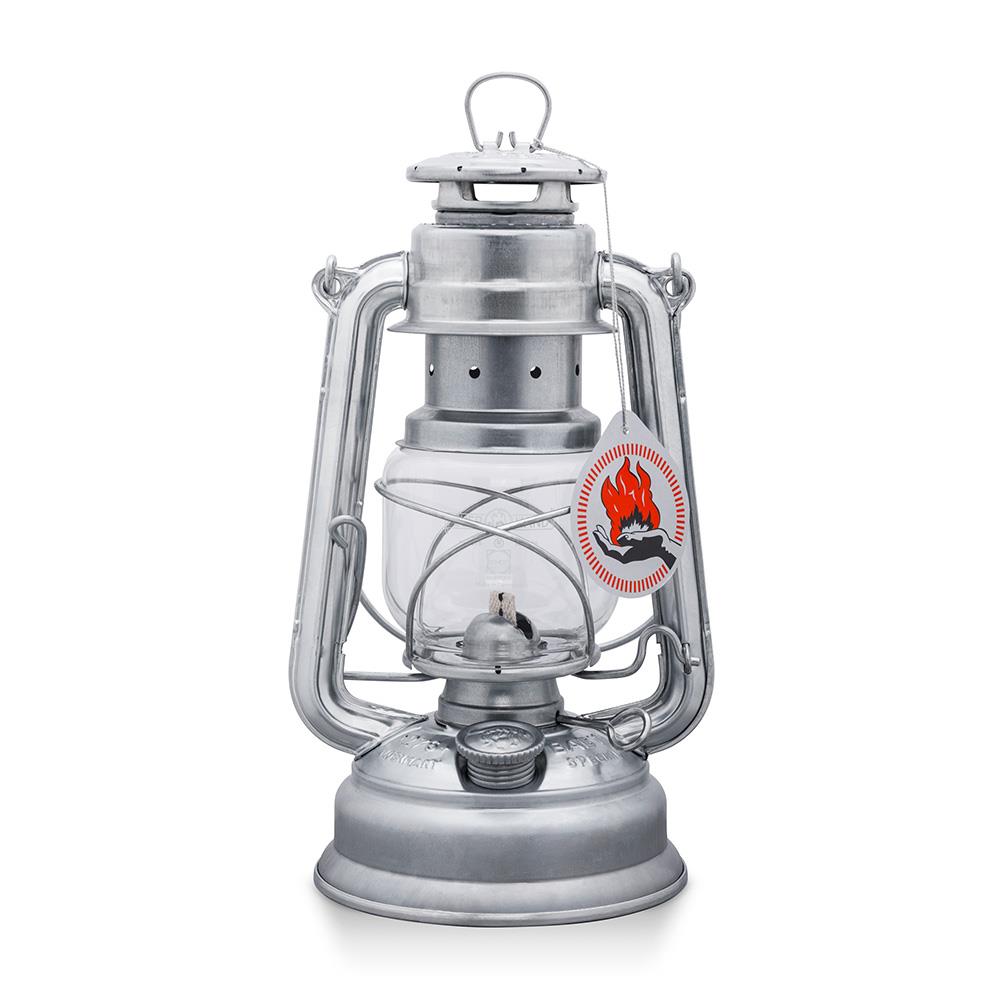
With classic cold-blast lanterns such as the Feuerhand Baby Special 276, the airflow normally ensures that the flame burns steadily. If the lantern still smokes, it is therefore worth taking a close look at the wick, fuel, and cleanliness.
If you want to understand how a storm lantern works in general, the article “What Is a Storm Lantern? Function, Advantages, and Areas of Use” provides a simple explanation.
Quick help: What to do if your storm lantern smokes
If your storm lantern is smoking, you should first turn down the flame. Slowly lower the wick until the flame becomes steadier and no visible smoke is produced. This small adjustment is often all that is needed.
If the smoke persists, extinguish the lantern and let it cool completely. Then check the wick, burner, and glass. If the wick is frayed or crooked, it should be trimmed neatly. If the glass is sooty, it should be cleaned. Residue on the burner can also impair combustion.
Important: Never add fuel while the lantern is burning or still warm. Always extinguish it first and wait until all components have cooled completely.
You can find detailed instructions for using a storm lantern safely in the article “How to Use a Storm Lantern Correctly: Filling, Lighting, and Extinguishing.”
The most common causes when a storm lantern smokes
When a hurricane lantern smokes, these are usually the possible causes:
- The wick is set too high.
- The wick is frayed or unevenly trimmed.
- The wrong fuel was used.
- The burner is dirty.
- The glass is covered in soot.
- The air supply is disrupted.
- The lantern was lit too soon after being filled.
- The tank or wick contains old residue.
Below, we will examine the causes individually and show you how to fix them.
Cause 1: The wick is set too high
A wick set too high is the most common cause of smoke and soot. If too much of the wick protrudes from the burner, too much fuel is burned. The flame becomes large and unsteady and may produce black soot particles.
You can recognize this by the flame being very high, flickering heavily, or dark deposits appearing at the top of the glass. A black rim on the glass is also a typical sign of a flame that is too large.
Solution: Turn the wick down
Slowly turn the wick down until the flame becomes smaller and steadier. It should burn evenly and not visibly smoke. With a hurricane lantern, a controlled, medium-sized flame is better than a very large flame.
Wait briefly after each small adjustment. The flame needs a moment to stabilize. If it then burns calmly, the wick was probably simply set too high.
You can find more information in the article “How to adjust the wick correctly: This is how your hurricane lantern burns evenly.”
Cause 2: The wick is frayed or unevenly trimmed
A poorly trimmed wick can also cause the hurricane lantern to smoke. If the edge of the wick is uneven, the flame will not burn cleanly. It may lean to one side, flicker, or burn more strongly in one area than another.
A frayed wick also transports the fuel unevenly. This creates small flame tips that can cause soot.
Solution: Trim the wick cleanly
Extinguish the lantern and let it cool completely. Then turn the wick up slightly and carefully trim off the frayed edge. The edge of the wick should be as straight and even as possible.
Afterward, you can turn the wick down slightly and relight the lantern. Observe the flame. It should burn more calmly and evenly.
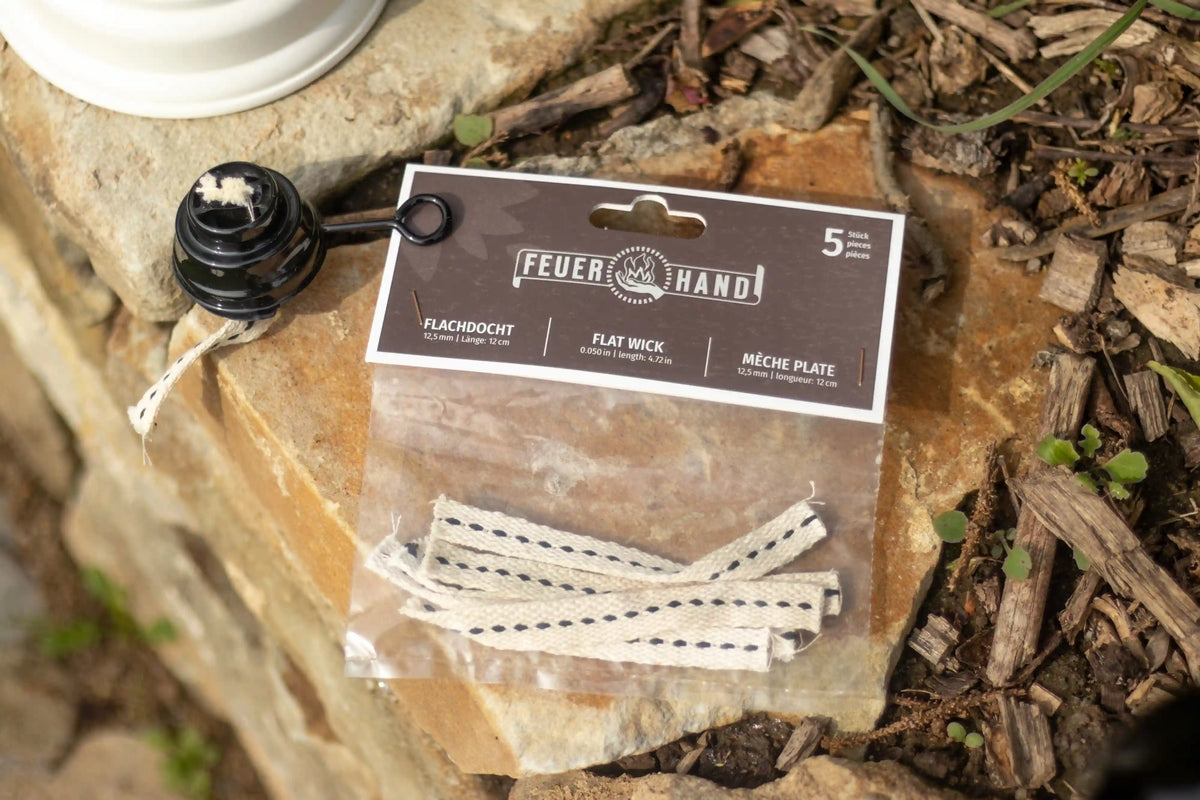
If the wick is heavily soiled, hardened, or damaged, it may be advisable to replace it.
Cause 3: The wrong fuel was used
Not every fuel is suitable for a hurricane lantern. If unsuitable oil is used, the lantern may smoke heavily, smell unpleasant, or produce soot. The flame may also become unsteady.
Examples of problematic fuels include cooking oil, scented oil, essential oils, gasoline, methylated spirits, barbecue lighter fluid, or technical fuels not intended for wick lamps. They can alter the burning behavior and make the lantern dirty or dangerous.
Solution: Use suitable lamp oil or kerosene
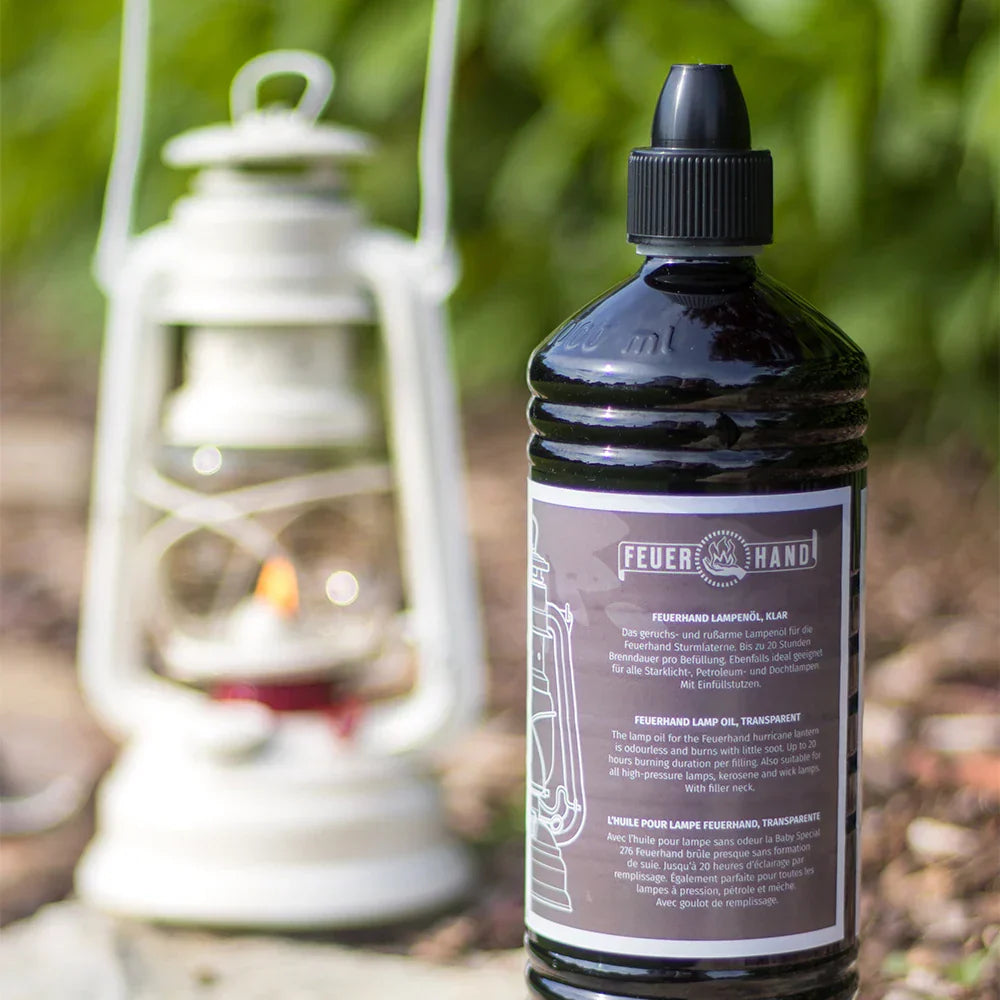
Use only fuel explicitly suitable for storm lanterns, wick lamps, or oil lamps. For classic storm lanterns such as the Feuerhand Baby Special 276, suitable lamp oil or kerosene can be used.
If you have used unsuitable fuel, you should stop operating the lantern. Extinguish it, let it cool, empty the tank, and thoroughly clean the tank, burner, and wick area. If the wick is heavily soiled, replacing it may be advisable.
You can find more information about choosing the right fuel in the article “Which Oil for a Storm Lantern? What You Should Know.”
Cause 4: The burner is dirty
Over time, residue can build up on the burner. This happens particularly when the lantern frequently burns with a flame that is too large, the fuel is not optimal, or the wick produces a lot of soot. Deposits can disrupt the air supply and cause the flame to burn unevenly.
A dirty burner is often indicated by flickering, soot formation, or a flame that is difficult to regulate.
Solution: Clean the burner
Extinguish the lantern and let it cool completely. Then remove any visible residue from the burner. Depending on the model, you can carefully clean the area with a dry cloth, a soft brush, or a suitable cleaning tool.
Be careful not to damage any components or unnecessarily fray the wick. After cleaning, the air should be able to circulate better again.
You can find detailed care instructions in the article “Cleaning a Storm Lantern: Care for the Glass, Tank, and Burner.”
Cause 5: The glass is sooty
Sooty glass is often not the cause but the result of incomplete combustion. Nevertheless, heavily soiled glass can impair the light output. Soot deposits also indicate that the flame was not adjusted optimally.
If the glass quickly turns black again even after you have cleaned it, you should check the wick, fuel, and burner.
Solution: Clean the glass and check the cause
Allow the lantern to cool completely and carefully clean the glass. Remove soot with a soft cloth. For heavier deposits, gentle cleaning may be appropriate depending on the manufacturer's instructions.
It is important not only to clean the glass but also to eliminate the cause of the soot. It is usually related to the wick or the fuel.
Cause 6: The air supply is disrupted
A storm lantern needs oxygen so that the flame can burn cleanly. In a cold-air lantern, fresh air is directed to the flame through the lantern’s design. If this airflow is disrupted, combustion may deteriorate.
Possible causes include dirt, blocked areas, incorrectly positioned components, or glass that has not been fitted correctly.
Solution: Check the airflow
Check that the glass, burner, and air tubes are correctly positioned and free of visible dirt. The lantern should be assembled cleanly so that air can reach the flame and warm exhaust air can escape.
We explain how airflow works in a cold-air lantern in the article “What Is a Cold-Air Lantern? Its Structure and Function Explained Simply.”
Cause 7: The wick has not had enough time to become saturated
If the wick is new or dry, it needs some time to become fully saturated with fuel. If the storm lantern is lit immediately after filling, the flame may burn unevenly or go out again quickly.
In some cases, smoke is also produced because the fuel is not transported evenly to the flame.
Solution: Wait briefly after filling
After filling, give the wick a few minutes to absorb the fuel. Only then should you light the lantern. This ensures a more even flame and helps protect the wick.
Cause 8: Old fuel or residue in the tank
If a storm lantern has not been used for a long time, residue may form in the tank. Old fuel, dust, or moisture can also impair combustion.
This can cause the lantern to smoke, smell, or burn unevenly after a long period of disuse.
Solution: Check and clean the tank
If the lantern has been standing unused for a long time, you should check the tank before using it again. Old fuel residues can be removed. The lantern should then be clean and dry before new fuel is added.
For longer-term storage, it is often advisable to store the lantern empty and dry.
Smoke or soot: What is the difference?
Smoke is produced during combustion and is immediately visible. It indicates that the flame is not burning cleanly. Soot is the black deposit that can subsequently settle on the glass, burner, or other components.
Both are often related. When the lantern smokes, soot often forms as well. If the globe turns black, this indicates that the flame was too large or the fuel did not burn cleanly.
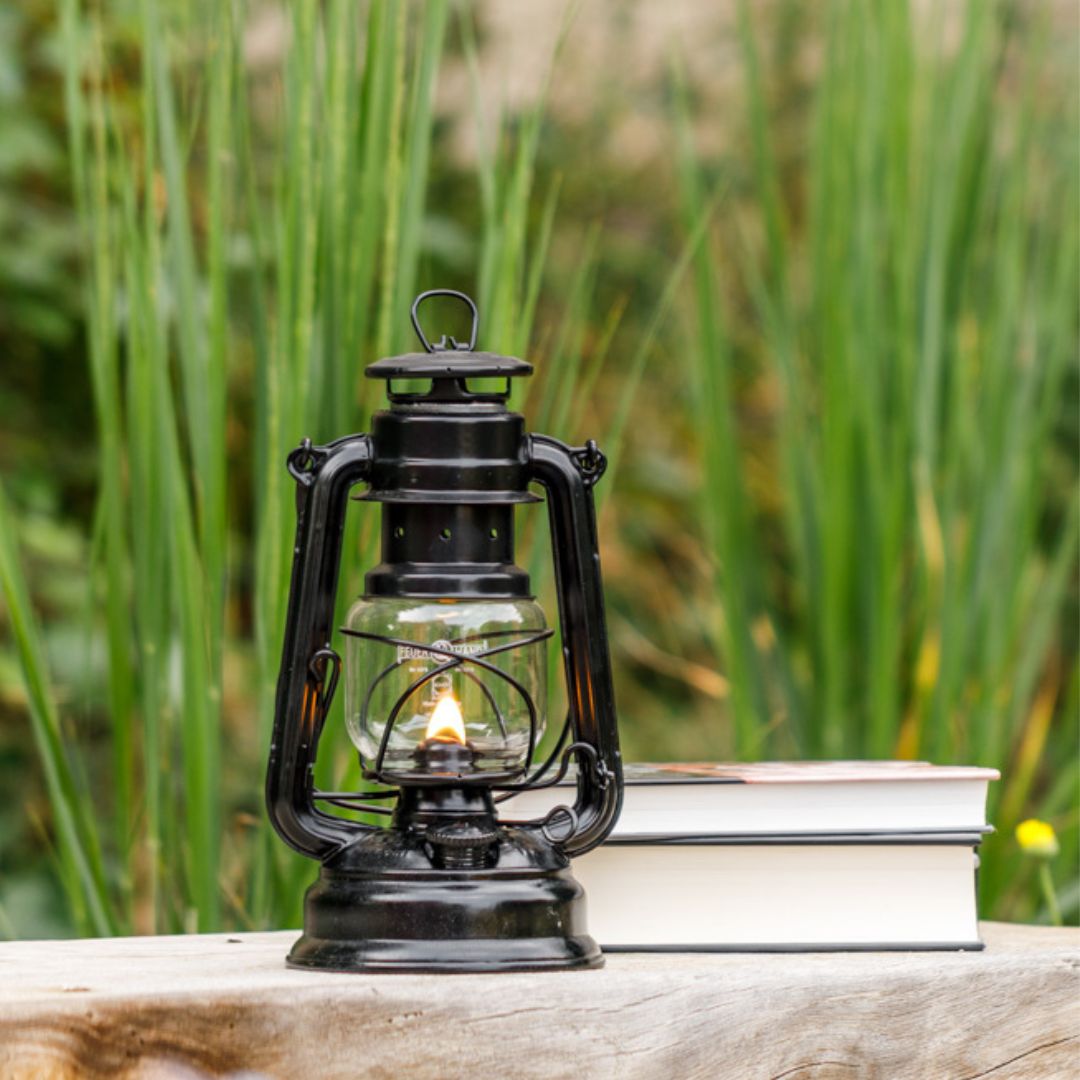
A correctly adjusted storm lantern should burn steadily and produce little to no visible smoke.
Is smoke from a storm lantern dangerous?
A storm lantern uses a real flame and fuel. It should therefore always be used carefully and safely. Visible smoke is a sign that combustion is not working optimally. The lantern should then be adjusted or checked.
Use fuel-powered storm lanterns only outdoors or in very well-ventilated areas. They should not be used in enclosed spaces, tents, or poorly ventilated areas. Always place the lantern securely, keep it away from flammable materials, and never leave it burning unattended.
If a lantern is smoking heavily, smells unusual, or cannot be adjusted, you should extinguish it, let it cool, and investigate the cause.
How to prevent your storm lantern from smoking
To ensure that your storm lantern burns as cleanly as possible, you should follow a few basic rules:
- Use only suitable fuel.
- Do not set the wick too high.
- Trim frayed wick edges cleanly.
- Allow a dry wick to soak fully after filling.
- Clean the globe and burner regularly.
- Check the airflow.
- Do not overfill the tank.
- Use the lantern only in safe, well-ventilated places.
- Extinguish the lantern if it is smoking heavily or cannot be adjusted.
These simple steps are usually enough to ensure that the flame burns steadily and evenly.
Feuerhand Baby Special 276 is smoking: What should you do?
If your Feuerhand Baby Special 276 is smoking, you should check the wick first. It is often set too high. Turn it down slightly and observe whether the flame becomes steadier. It should not be too large and should burn evenly behind the globe.
If that does not help, check the fuel. Use only suitable lamp oil or kerosene for storm lanterns. Also check whether the burner is clean and the globe is seated correctly.
Because the Baby Special 276 is a cold-blast lantern that relies on proper airflow, the air passages should also be clear and the components correctly installed. If everything is clean, the wick is adjusted correctly, and the fuel is suitable, the lantern should burn steadily and reliably.
When should the wick be replaced?
A wick lasts a long time but occasionally needs to be replaced. This may be advisable if it is badly frayed, hardened, dirty, or burned unevenly. A new wick can also help if the lantern continues to produce soot despite cleaning, suitable fuel, and the correct adjustment.
A clean, suitable wick improves fuel absorption and helps maintain an even flame.
Conclusion: If the storm lantern is smoking, the cause is usually the wick, fuel, or maintenance
A smoking storm lantern is usually no cause for concern. The wick is often set too high, the fuel is unsuitable, or the burner is dirty. These causes can be fixed with a few simple steps.
First, turn the wick down. If the lantern continues to smoke, check the wick edge, fuel, burner, glass, and air supply. With suitable lamp oil or kerosene, a neatly trimmed wick, and regular maintenance, your storm lantern will burn steadily and evenly again.
This keeps it a reliable source of light for the garden, patio, balcony, and camping, providing exactly the warm, lively light that makes a classic storm lantern so special.
Frequently asked questions: Storm lantern smoking
Why is my storm lantern smoking?
A storm lantern usually smokes because the wick is set too high, the fuel is unsuitable, or the burner is dirty. A frayed wick can also cause smoke.
What should I do if my storm lantern is producing soot?
First, turn the wick down slightly. If the lantern continues to produce soot, extinguish it, let it cool, and check the wick, fuel, burner, and glass.
Why is the glass of my storm lantern turning black?
Black glass is usually caused by soot. The flame is often too large, or the fuel is not burning cleanly. Lowering the wick and using suitable fuel usually helps.
Can the wrong oil cause smoke?
Yes, unsuitable oil can cause smoke, soot, and an unpleasant smell. Use only fuel expressly suitable for storm lanterns or wick lamps.
How high should the wick be in a storm lantern?
The wick should be set only high enough to produce a steady, even flame. If the flame becomes very large or smokes, the wick is set too high.
Do I need to trim the wick if the storm lantern is smoking?
If the wick is frayed or uneven, you should trim it neatly. If it is simply set too high, it is often enough to turn it down.
Should a storm lantern smoke at all?
A properly adjusted storm lantern should not visibly smoke heavily. A slight smell may occur briefly when lighting or extinguishing it, but continuous smoking indicates a problem.