The wick is one of the most important components of your storm lantern. It transports fuel from the tank to the flame and determines how steadily, brightly, and cleanly your lantern burns. When the wick is properly adjusted, it produces an even flame with a warm light. If it is too high, crooked, or frayed, the storm lantern may smoke, produce soot, or flicker erratically.
The good news is that adjusting the wick correctly is easy. With a few simple steps, you can ensure that your storm lantern burns reliably and that the glass stays clean longer. In this guide, you will learn how to adjust the wick of your storm lantern correctly, when to trim it, and how to tell whether the flame is burning optimally.
Table of contents
Why is the wick so important in a storm lantern?
How can you tell whether a wick is properly adjusted?
How high should the wick be on a storm lantern?
Adjusting the Wick: Step by Step
What should you do if the flame is too large?
What should you do if the flame is too small?
When should you trim the wick?
Trimming the wick: How to do it properly
Should the wick be cut round or straight?
Why does an incorrectly adjusted wick produce soot?
Why does the flame flicker despite the wick being set correctly?
How often does the wick need to be adjusted?
When does the wick need to be replaced?
Typical mistakes when adjusting the wick
Checklist: How to make your storm lantern burn evenly
Conclusion: The right wick provides a steady light
Frequently asked questions about the wick of a storm lantern
Why is the wick so important in a storm lantern?
A storm lantern works through the interaction of the tank, fuel, wick, burner, glass, and airflow system. The fuel is held in the tank and absorbed by the wick. It rises through the wick’s fibers to the burning point, where it is ignited and produces the flame.
The wick is therefore the link between fuel and light. When it is clean, even, and properly adjusted, the flame can burn steadily. If it is set too high or is damaged, too much fuel is burned. This produces smoke or soot.
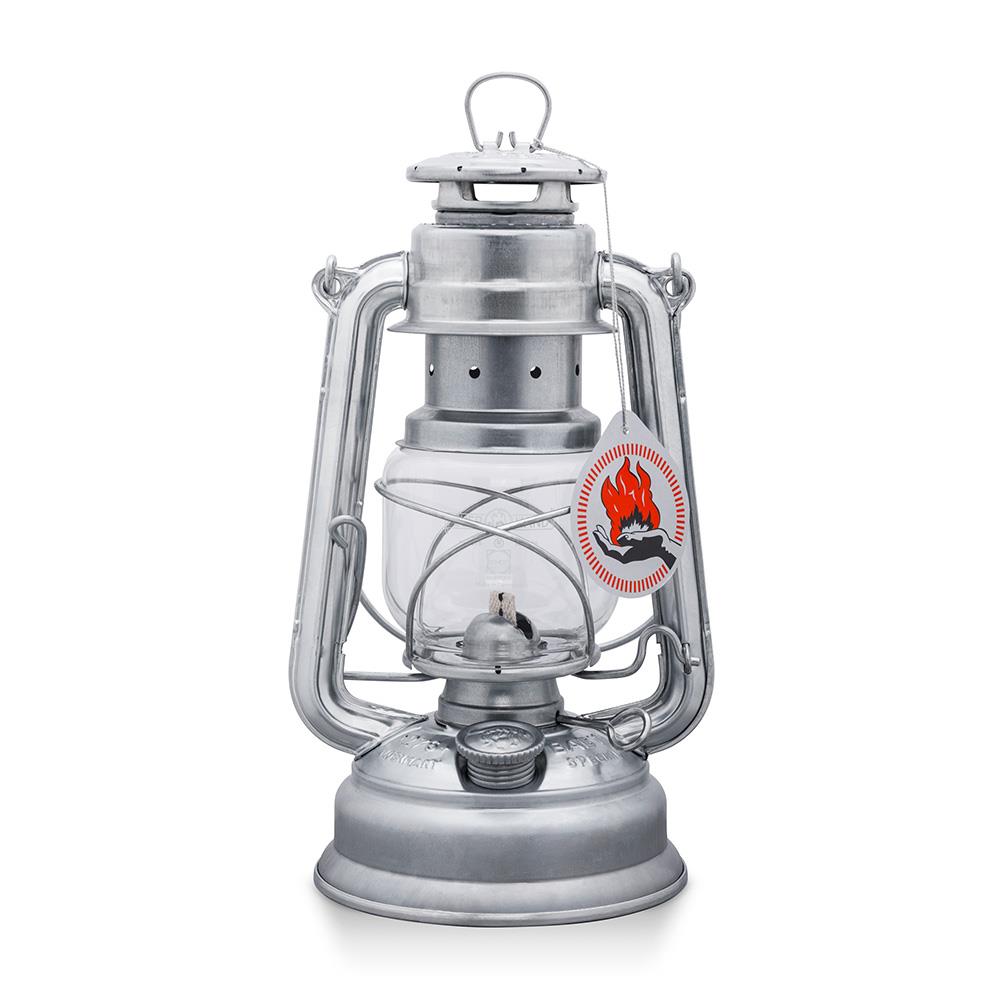
In a classic cold-air lantern such as the Feuerhand Baby Special 276, the wick works especially closely with the airflow system. The lantern can burn evenly only when the amount of fuel and the oxygen supply are properly balanced.
If you would like to learn more about how the design works, you will find a simple explanation in the article “What Is a Cold-Air Lantern? Design and Function Explained Simply.”
How can you tell whether a wick is properly adjusted?
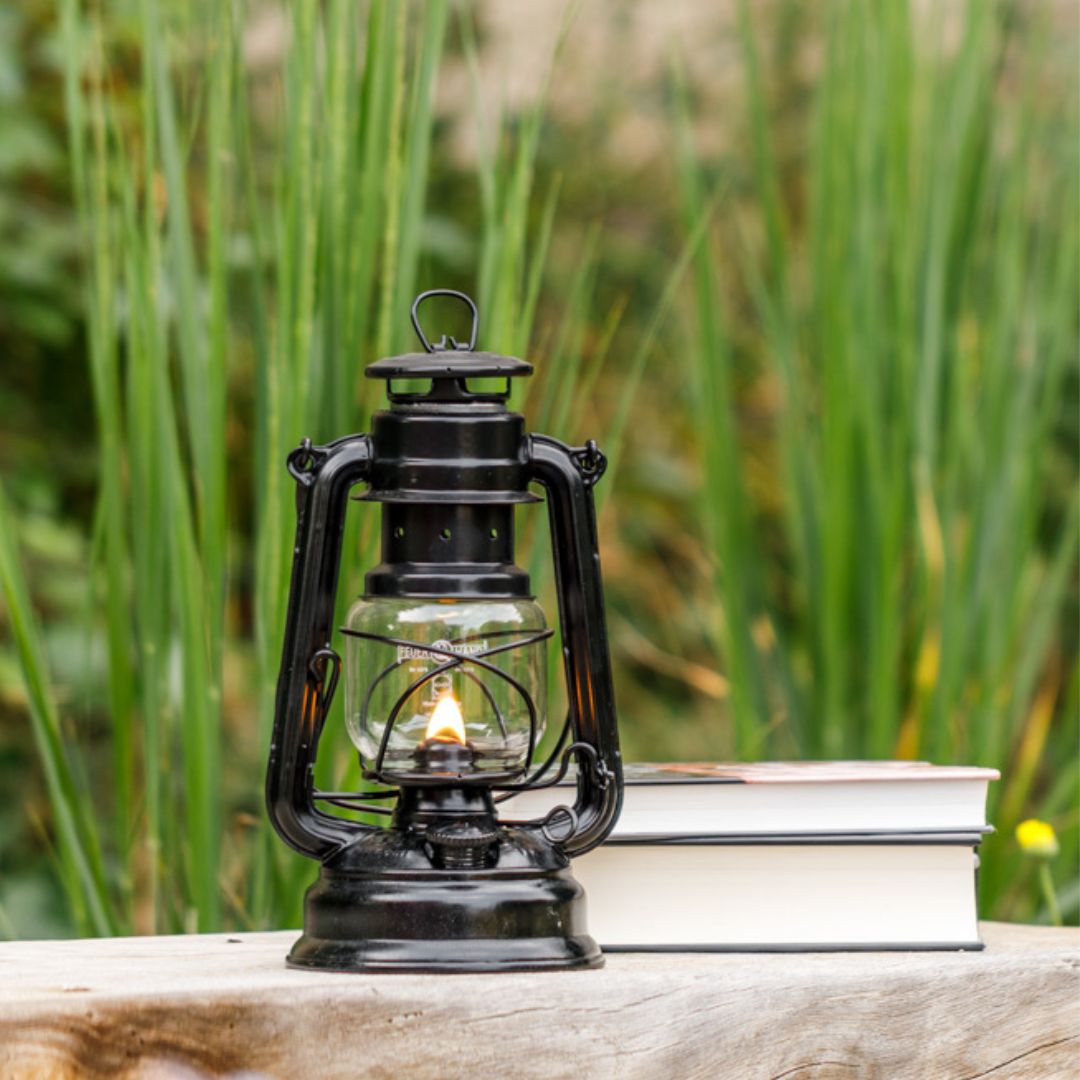
A properly adjusted wick produces a calm, even flame. It burns steadily, flickers only slightly, and produces no visible smoke. The glass stays clear significantly longer, and rapid black deposits do not form.
The flame should not be too high. Although a large flame may appear brighter at first glance, it uses more fuel and can cause soot. A controlled flame that emerges evenly from the burner and burns steadily behind the glass is better.
You can recognize a good flame pattern by the following:
- the flame burns evenly
- it does not flicker excessively
- no visible smoke is produced
- the glass does not turn black quickly
- the flame does not extend far into the glass
- the brightness can be adjusted easily
If your storm lantern smokes or the glass quickly turns black, the wick is often set too high. You can find more information in the article “Storm Lantern Smoking: Causes and Simple Solutions.”
How high should the wick be on a storm lantern?
The wick should protrude from the burner only far enough to produce a steady, controlled flame. A few millimeters are often enough. What matters is not the exact height, but the appearance of the flame.
If the flame becomes very large, flickers heavily, or produces soot, the wick is too high. Carefully turn it down slightly. If the flame is too small or threatens to go out, you can raise the wick slightly.
Always work in small increments. Even a slight change in the wick height can significantly affect the flame.
Adjusting the Wick: Step by Step
Adjust the wick of your storm lantern using the control mechanism on the burner. Proceed calmly and carefully.
1. Set up the lantern safely
Place your storm lantern on a stable, level, heat-resistant surface. Make sure there are no flammable materials nearby. The lantern should not be placed near the edge of a table or where it could be knocked over.
2. Check the fuel and wick
Before lighting the lantern, there should be enough suitable fuel in the tank. If the wick is new or dry, give it a few minutes after filling so it can fully absorb the fuel.
You can find more information in the article “Which Oil for a Storm Lantern? What You Should Know.”
3. Turn the wick out only slightly
Before lighting, turn the wick out only a little. It should not protrude far from the burner. A low setting is usually better for starting than one that is too high.
4. Light the wick
Carefully lift the glass and light the wick with a long match or lighter. Then lower the glass again.
You can find detailed instructions for lighting it safely in the article “How to Use a Storm Lantern Properly: Filling, Lighting, and Extinguishing.”
5. Observe the flame
Wait a moment for the flame to stabilize. It may still change slightly immediately after lighting. Observe whether it burns steadily or flickers heavily.
6. Slowly readjust the wick
If the flame is too small, you can turn the wick up slightly. If it becomes too large, unsteady, or starts to smoke, turn the wick back down.
Always adjust it slowly and in small increments. This will help you find the right setting without making the flame too large.
What should you do if the flame is too large?
If the flame is too large, turn the wick down slightly immediately. A flame that is too large often produces soot, dirties the glass, and uses more fuel than necessary.
Typical signs of a flame that is too large include:
- visible smoke
- black soot on the glass
- heavy flickering
- very bright, unsteady flame
- unpleasant odor
- rapid burner contamination
Slowly turn the wick down and wait briefly. If the flame becomes smaller and steadier, the wick height was the cause. If the lantern continues to produce soot, you should also check the fuel, burner, and air supply.
What should you do if the flame is too small?
If the flame remains very small or goes out, the wick may be set too low. Turn it up slightly in small increments. Wait briefly after each adjustment so the flame has time to respond.
If the flame remains weak, the wick may not yet be fully saturated with fuel. This happens especially with new or very dry wicks. In this case, extinguish the lantern, let it cool down, and give the wick more time to absorb the fuel.
Old fuel, a dirty tank, or a damaged wick can also prevent the flame from burning properly.
 When should you trim the wick?
You should trim the wick when its edge is frayed, uneven, or heavily charred. An uneven wick edge prevents the flame from burning cleanly. It may flicker, lean to one side, or produce soot in certain areas.
Even if the storm lantern smokes despite using the right fuel and setting it low, it is worth checking the wick. Often, simply cutting the top edge cleanly is enough.
Trimming the wick: How to do it properly
First extinguish the lantern and let it cool completely. The wick and burner must no longer be hot. Then turn the wick up slightly so you can see the top edge clearly.
Carefully trim off frayed or charred fibers. The wick edge should be even and clean. For many storm lanterns, a straight cut is advisable. Above all, make sure no individual fibers stick out noticeably.
Then turn the wick down slightly again before lighting the lantern. Start with a low flame and adjust it slowly.
Should the wick be cut round or straight?
For many classic storm lanterns, a straight, clean cut is sufficient. What matters is that the edge is even and no frayed fibers are sticking out.
An uneven cut can cause the flame to burn higher in one spot than another. This makes it unstable and can cause soot.
If you are unsure, use the existing wick and the manufacturer's specifications for your lantern as a guide.
Why does an incorrectly adjusted wick produce soot?
If the wick is set too high, too much fuel reaches the flame. The flame becomes larger, but does not always receive enough oxygen for clean combustion. This produces smoke and soot.
Soot often first settles on the glass. After a short time, the glass turns black and the light output decreases. The burner and air passages can also become contaminated with soot.
A correctly adjusted wick significantly reduces these problems. That is why the wick height is one of the most important factors in achieving a clean-burning storm lantern.
Why does the flame flicker despite the wick being set correctly?
If the wick is set correctly but the flame still flickers strongly, there may be other causes. The fuel may be unsuitable, the burner may be dirty, or the air supply may be obstructed. An unsafe location with strong wind can also affect the flame.
First check whether the lantern is clean and the glass is seated correctly. Then check the fuel and the wick edge. If the lantern has not been used for a long time, residue in the tank may also affect combustion.
You can find more care tips in the article “Cleaning a Storm Lantern: Care for the Glass, Tank, and Burner.”
How often does the wick need to be adjusted?
You should briefly check the wick every time you use the lantern. Usually, it is enough to set it correctly once when lighting it and make only slight adjustments during use if necessary.
If the flame burns steadily, you do not need to change anything. If it gets larger, smokes, or flickers, you should adjust the wick height.
After extinguishing the lantern, it may be a good idea to turn the wick down slightly. This way, you will not accidentally start with a flame that is too high the next time you use it.
When does the wick need to be replaced?
A wick is a consumable part. It does not need to be replaced after every use, but it does not last indefinitely. Replacement may be advisable if the wick is badly frayed, hardened, dirty, or burned unevenly.
Even if the wick can no longer be turned up and down smoothly or the flame remains unsteady despite being adjusted correctly, a new wick may help.
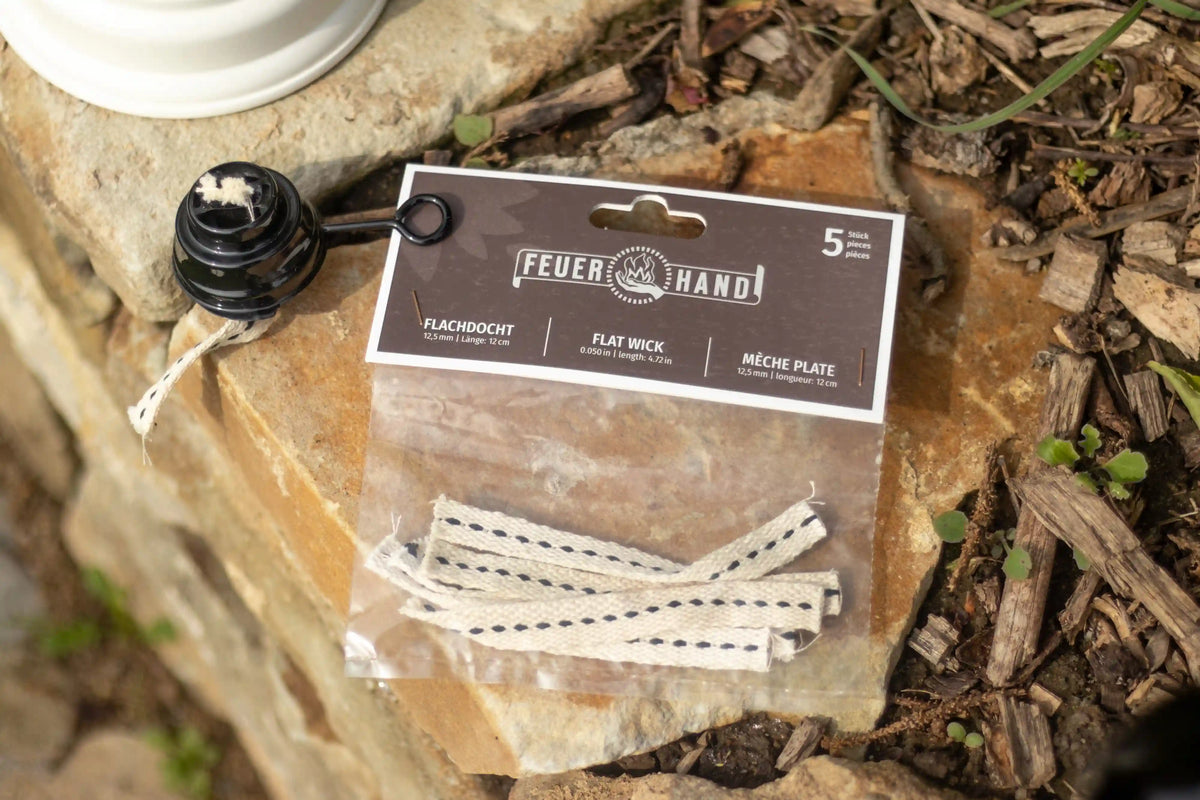
Always use a suitable replacement wick for your lantern model. This is the only way to ensure that the fuel is absorbed properly and transported evenly to the flame.
Adjusting the wick of the Feuerhand Baby Special 276 correctly
On the Feuerhand Baby Special 276, the wick is adjusted using the rotary mechanism on the burner. The same applies here: Start with a low setting and adjust the flame slowly.
The Baby Special 276 is designed as a cold-air lantern with a balanced interaction between the wick, fuel, and airflow. When the wick is positioned correctly and not set too high, the flame burns calmly and evenly behind the glass.
If the glass quickly turns black, the flame flickers strongly, or visible smoke appears, you should turn the wick down and check the wick edge. This often solves the problem.
Typical mistakes when adjusting the wick
Small mistakes are often made when adjusting the wick, and they can significantly affect the flame. The main one is turning the wick up too far. Although a large flame may appear brighter, it quickly leads to soot.
A dry wick is sometimes lit too soon as well. If it has not absorbed enough fuel yet, it will burn poorly and may be damaged.
It is also often forgotten that frayed wick edges need to be trimmed. Even individual fibers can cause the flame to burn unevenly.
Avoid these mistakes:
- Setting the wick too high
- Lighting a dry wick too soon
- Not trimming a frayed wick
- Using the wrong fuel
- Continuing to burn the lantern despite soot buildup
- Not cleaning the burner and glass
- Touching or cutting the wick while the lantern is hot
Checklist: How to make your storm lantern burn evenly
Before lighting your storm lantern, you can use this short checklist as a guide:
- The wick is clean and not badly frayed.
- The wick edge is cut evenly.
- The wick is not turned up too far.
- The wick has had enough time to absorb fuel.
- The fuel is suitable for storm lanterns.
- The burner and glass are clean.
- The lantern is standing securely and upright.
- After lighting, adjust the flame slowly.
- If there is smoke or soot, turn the wick down.
When these points are met, your storm lantern will generally burn calmly, evenly, and reliably.
Conclusion: The right wick provides a steady light
The wick largely determines how cleanly and evenly your storm lantern burns. When it is adjusted correctly, it produces a calm flame with warm light. If it is too high, uneven, or frayed, the lantern may smoke, produce soot, or flicker.
Therefore, make sure the wick edge is clean, the basic setting is low, and make small adjustments when regulating the flame. Also use suitable fuel and keep the burner and glass clean.
With a classic storm lantern such as the Feuerhand Baby Special 276, this reveals exactly what makes this light source so special: simple technology, reliable performance, and warm flame light that creates a calm, special atmosphere outdoors.
Frequently asked questions about the wick of a storm lantern
How do you adjust the wick of a storm lantern correctly?
Turn the wick out only a few millimeters and light it. Observe the flame and adjust it slowly. It should burn calmly and evenly without visibly smoking.
How high can the wick be set in a storm lantern?
The wick should be set only high enough to produce a controlled flame. If the flame becomes very large, flickers, or produces soot, the wick is set too high.
Why is my storm lantern producing soot despite using the correct oil?
The wick is often set too high, frayed, or cut unevenly. A dirty burner or disrupted airflow can also cause soot.
When does the wick need to be trimmed?
You should trim the wick when its edge is frayed, uneven, or heavily charred. A clean wick edge helps produce an even flame.
Does a new wick need time to soak before lighting?
Yes, a new or dry wick should be given a few minutes after filling to become fully saturated with fuel. Only then should the lantern be lit.
Why is the flame of my storm lantern flickering?
A flickering flame can be caused by an uneven wick, incorrect fuel, dirt on the burner, or disrupted airflow. Wind or an unstable location can also affect the flame.
How often does the wick need to be replaced?
The wick only needs to be replaced if it is heavily soiled, hardened, damaged, or burned unevenly. With normal use, it is often sufficient to trim it clean occasionally.