A storm lantern is robust, durable, and designed for outdoor use. To ensure that it burns reliably and its warm light shines clearly outward, you should clean and maintain it regularly. The glass, tank, burner, and wick area in particular play an important role in producing a calm, steady flame.
If the glass is sooty, the burner is dirty, or residue accumulates in the tank, the storm lantern may smoke, flicker, or burn less effectively. The good news: maintenance is straightforward. With a few simple steps, your lantern will remain ready for use and accompany you for many evenings in the garden, on the patio, balcony, or while camping.
In this guide, you will learn how to clean your storm lantern properly, what to look out for with the glass, tank, and burner, and how to avoid common maintenance mistakes.
Table of contents
Why should you clean a storm lantern?
How often should you clean a storm lantern?
Before cleaning: Safety first
What do you need to clean a storm lantern?
Cleaning a storm lantern’s glass
Cleaning the storm lantern's burner
Cleaning the storm lantern's tank
Clean the exterior surfaces of the storm lantern
Clean the storm lantern after extended storage
Store a storm lantern properly
Typical maintenance mistakes with storm lanterns
Checklist: Cleaning and maintaining a storm lantern
Conclusion: Regular maintenance ensures steady light
Frequently asked questions about cleaning a storm lantern
Why should you clean a storm lantern?
A storm lantern operates with fuel, a wick, and a real flame. Over time, soot, dust, fuel residue, or other deposits may form. These residues affect not only its appearance but also its function.
Soot-covered glass lets less light through. A dirty burner can restrict the air supply. Residue in the tank can contaminate the fuel and cause an unsteady flame. An old or frayed wick can also cause the lantern to smoke or burn unevenly.
Regular maintenance therefore helps preserve your storm lantern’s functionality. It provides a clearer light, cleaner combustion, and a longer service life for the individual components.
If your lantern is already smoking or producing soot, the article “Storm Lantern Smoking: Causes and Simple Solutions” provides targeted troubleshooting.
How often should you clean a storm lantern?
How often you should clean your storm lantern depends on how frequently you use it. With regular use, a quick check after each use is worthwhile. Often, it is enough to check the glass, inspect the wick, and wipe away any fuel residue on the outside.
A more thorough cleaning is advisable when:
- the glass is visibly sooty
- the flame burns erratically
- the lantern smokes or smells unpleasant
- the burner is dirty
- fuel has spilled
- the lantern has not been used for a longer period
- there is residue in the tank
- you want to store the lantern for a longer period
Especially after longer periods of storage, you should inspect the lantern before lighting it again. This ensures that the tank, wick, burner, and glass are clean and in working order.
Before cleaning: Safety first
Before cleaning your storm lantern, make sure it is completely extinguished and has cooled down. The glass, burner, and housing may remain hot after use. Therefore, always wait until the lantern can be handled safely.
It is best to clean the lantern in a well-ventilated area and on a surface that is not easily damaged. If there is still fuel in the tank, keep the lantern upright and avoid tipping or shaking it. Absorb any remaining fuel with a suitable cloth and dispose of it safely.
The important thing is: Never open the tank while the lantern is burning or still warm. Do not add fuel until the lantern has cooled completely.
You can find safe, step-by-step instructions for using it in the article “How to Use a Storm Lantern Properly: Filling, Lighting, and Extinguishing.”
What do you need to clean a storm lantern?
You usually do not need any special tools to clean a storm lantern. It is important to work gently and avoid using harsh cleaning products that could damage the material, finish, or glass.
The following are helpful:
- a soft cloth
- paper towels or absorbent cloths
- a soft brush
- warm water
- mild dish soap
- a small funnel for refilling later
- suitable protective gloves, if necessary
- a dry, well-ventilated workspace
Do not use abrasive sponges, stiff wire brushes, or harsh cleaners. They can damage the surface. Take extra care when cleaning painted or colored storm lanterns, and use only mild cleaning products.
Cleaning a storm lantern’s glass
The glass is the part where dirt becomes visible most quickly. If the flame was set too high or the fuel did not burn cleanly, black soot can settle on the glass. This makes the light appear darker and less clear.
How to clean the glass
Allow the lantern to cool completely. Carefully lift the glass or remove it according to the manufacturer’s instructions, depending on the model. First, remove loose soot with a dry, soft cloth or paper towel.
For heavier deposits, you can clean the glass with warm water and a little mild dish soap. Then rinse it thoroughly and dry it completely before reinserting it.
Make sure not to press the glass too hard or tilt it. Although lantern glass is durable, it should still be handled carefully.
Why does the glass turn black?
If the glass turns black quickly, this is usually a sign of incomplete combustion. The wick is often set too high, frayed, or the fuel is unsuitable. A dirty burner can also cause soot to form.
So don’t just clean the glass; also check the cause. Otherwise, the glass will become sooty again after a short time.
You can find more information in the article “How to Adjust the Wick Correctly: This Is How Your Storm Lantern Burns Evenly”.
Cleaning the storm lantern's burner
The burner is the area where the wick is located and the flame is produced. It is particularly important for even combustion. If soot, dust, or fuel residue accumulates there, the flame may become unsteady.
How to clean the burner
Extinguish the lantern and let it cool completely. Carefully remove visible residue with a dry cloth or soft brush. Work gently to avoid damaging or fraying the wick.
If the burner is more heavily soiled, you can carefully clean it depending on the model and the manufacturer's instructions. It is important that the area is completely dry afterward before you use the lantern again.
Make sure the wick mechanism remains movable. You should still be able to turn the wick smoothly up and down.
How can you tell if a burner is dirty?
A dirty burner can make itself known through various signs:
- the flame flickers strongly
- the lantern smokes or produces soot
- the wick is difficult to adjust
- the flame burns unevenly
- the glass quickly turns black
- there is an unpleasant smell while burning
If these symptoms occur, you should check the burner, wick, and fuel.
Inspecting and maintaining the wick area
The wick is a wear part and should be checked regularly. It does not need to be replaced after every use, but it should be clean, flexible, and even.
If the upper edge is frayed, uneven, or heavily charred, the flame may burn erratically. In this case, you should carefully trim the wick. The edge should be as even as possible so that the flame burns steadily and under control.
If the wick is heavily soiled, hardened, or damaged, replacing it may be advisable. Always use a suitable replacement wick for your lantern model.
You can find detailed instructions in the article “How to Adjust the Wick Correctly: This Is How Your Storm Lantern Burns Evenly”.
Cleaning the storm lantern's tank
The tank holds the fuel. As long as you use suitable fuel and use the lantern regularly, the tank does not need to be cleaned after every use. Nevertheless, you should inspect it occasionally.
Cleaning is especially advisable if there was old fuel in the tank, visible contaminants are present, or the lantern has not been used for an extended period.
How to clean the tank
Only empty the tank once the lantern has cooled completely. Work in a well-ventilated area and make sure to collect any remaining fuel safely. Dispose of old fuel residues in accordance with local regulations and the manufacturer's instructions.
Wipe the outside of the tank area with a soft cloth. If there is residue in the tank, proceed carefully and follow the manufacturer's instructions. It is important that the tank is dry and free of contaminants before new fuel is added.
Avoid putting water or aggressive cleaners in the tank unless this is expressly recommended. Residue or moisture may impair combustion later.
When should the tank be emptied?
If you use your storm lantern regularly, suitable fuel can often remain in the tank as long as the lantern is standing securely and tightly sealed. For longer-term storage, however, it is often advisable to empty the tank.
This is especially important if the lantern has not been used for weeks or months. This helps you avoid old fuel residues, possible buildup, or unpleasant odors.
Clean the exterior surfaces of the storm lantern
A storm lantern can also accumulate dust, dirt, fingerprints, or fuel residues on the outside. Clean the exterior surfaces with a soft, slightly damp cloth. If necessary, you can use a little mild dish soap.
Then dry the lantern thoroughly, especially if it is made of metal or has painted surfaces. Moisture should not remain on the lantern for extended periods.
You should be especially careful with colored or coated lanterns. Do not use abrasive cleaners or hard sponges, as they may damage the surface.
Check the airflow
In a cold-blast lantern, airflow is crucial to its operation. Fresh air is directed to the flame through side tubes, while warm exhaust air escapes upward. If these air passages are dirty or blocked, the flame may burn unevenly or produce soot.
Therefore, check occasionally whether the air tubes, burner area, and chimney are free of visible dirt. The glass should also be seated properly so that the lantern functions correctly.
We explain exactly how the airflow works in the article “What Is a Cold-Blast Lantern? Its Structure and Function Explained Simply.”
Clean the storm lantern after extended storage
If your storm lantern has not been used for an extended period, you should inspect it thoroughly before using it again. Dust, old fuel, or a dry wick can impair its operation.
It is best to proceed as follows:
- Wipe down the exterior surfaces
- Check and clean the glass
- Check the burner area
- Check the wick and trim it if necessary
- Check the tank for old fuel residues
- Fill with fresh, suitable fuel
- After filling, allow the wick to absorb fuel for a few minutes
- First test the lantern with a small flame
This is how you ensure that your storm lantern burns reliably again after a period of disuse.
Store a storm lantern properly
After cleaning, the lantern should be completely dry. Store it in a dry, sheltered place. Direct moisture, heavy soiling, or unsafe storage can damage the lantern in the long term.
If you do not use the lantern for an extended period, consider emptying the tank. Always store fuel separately, tightly sealed, and out of reach of children. Store lamp oil or kerosene in the original packaging or in clearly labeled, suitable containers.
The wick should also not remain damp or dirty for extended periods. A quick check before the next use helps prevent problems when lighting it.
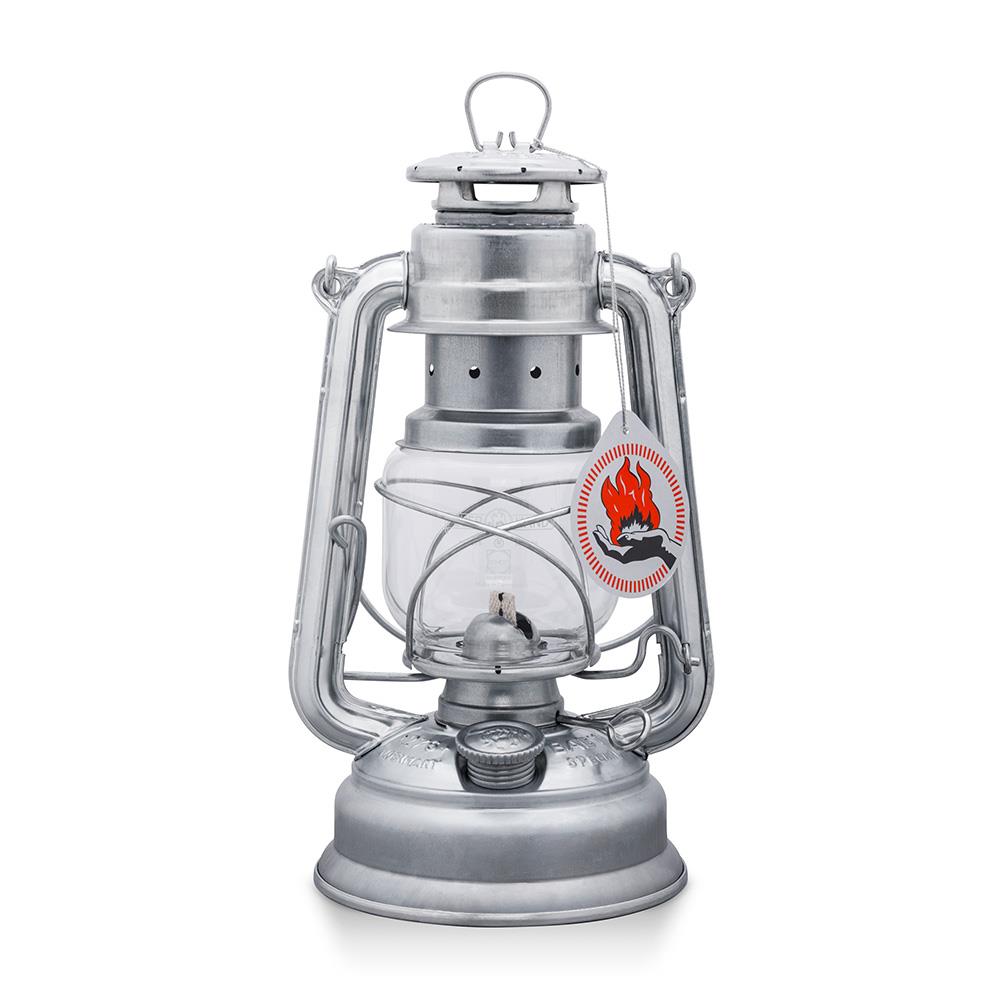
Cleaning and maintaining the Feuerhand Baby Special 276
The Feuerhand Baby Special 276 is built to be robust as a classic storm lantern and cold-blast lantern. To keep it burning reliably for a long time, you should regularly check the glass, burner, wick, and tank here as well.
You can carefully clean sooty glass as soon as the lantern has completely cooled down. Check the wick for an even edge and trim it cleanly if necessary. Also use only suitable fuel for storm lanterns so that the flame burns steadily and produces less residue.
Precisely because the Baby Special 276 uses a proven mechanical principle, maintenance remains straightforward. With clean fuel, a correctly adjusted wick, and occasional cleaning, it remains a durable light source for the garden, patio, balcony, and camping.
Typical maintenance mistakes with storm lanterns
Many problems are not caused by the lantern itself, but by small mistakes in maintenance and use. For example, cleaning only the glass without checking the cause of the soot. If the wick remains set too high, the glass will quickly turn black again.
A dirty burner is also often overlooked. Yet this area in particular can strongly affect the flame. Unsuitable fuel is equally problematic, as it leaves residue or does not burn cleanly.
Avoid these maintenance mistakes:
- Clean the lantern while it is still warm
- Clean the glass with abrasive products
- Use harsh cleaners
- Touch or cut the wick while the lantern is hot
- Ignore old fuel in the tank
- Use the wrong fuel
- Clean sooty glass, but do not check the wick
- Do not check the burner area
- Store the lantern while damp
Checklist: Cleaning and maintaining a storm lantern
This short checklist helps you with regular maintenance:
- Lantern is completely extinguished and cooled down
- Glass is clean and dry
- Burner is free of soot and residue
- Wick is straight and not badly frayed
- The tank is free of old residue
- Exterior surfaces are dry and clean
- Airflow is not blocked
- Suitable fuel is used
- The lantern is stored dry and safely
If you regularly follow these points, your storm lantern will remain reliably ready for use.
Conclusion: Regular maintenance ensures steady light
Cleaning a storm lantern is straightforward and worthwhile. Clean glass provides clear light. A well-maintained burner supports a steady flame. A clean tank and suitable fuel help prevent smoke and soot.
You should regularly check the glass, tank, burner, and wick area in particular. This helps you identify minor problems early and fix them before the lantern burns unevenly or becomes heavily sooted.
A classic storm lantern like the Feuerhand Baby Special 276 shows how durable simple technology can be when properly maintained. With a little attention, it remains a reliable companion for warm moments of light outdoors.
Frequently asked questions about cleaning a storm lantern
How do you clean the glass of a storm lantern?
Allow the lantern to cool completely and remove soot with a soft cloth. For heavier deposits, you can use warm water and mild dish soap. Then dry the glass thoroughly.
Why does the glass of my storm lantern turn black?
Blackened glass is usually caused by soot. The wick is often set too high, frayed, or the wrong fuel is being used. A dirty burner can also be the cause.
How do you clean the burner of a storm lantern?
The burner should only be cleaned when the lantern has cooled completely. Carefully remove visible residue with a dry cloth or a soft brush. Be careful not to damage the wick.
Does a storm lantern's tank need to be cleaned?
Not after every use. Cleaning is advisable if old fuel residue, dirt, or deposits are visible, or if the lantern has not been used for an extended period.
Can you put water in the tank?
Water in the tank can impair combustion later. Only use water or cleaning agents in the tank if this is expressly recommended for your model. The tank should be completely dry before the next use.
How often should you clean a storm lantern?
With regular use, a quick check after each use is often sufficient. More thorough cleaning is advisable if the lantern is sooty, smoky, dirty, or has been stored for a longer period.
How do you store a storm lantern properly?
Store the lantern in a dry, clean, and protected place. For longer-term storage, it may be advisable to empty the tank and store the lantern completely dry.