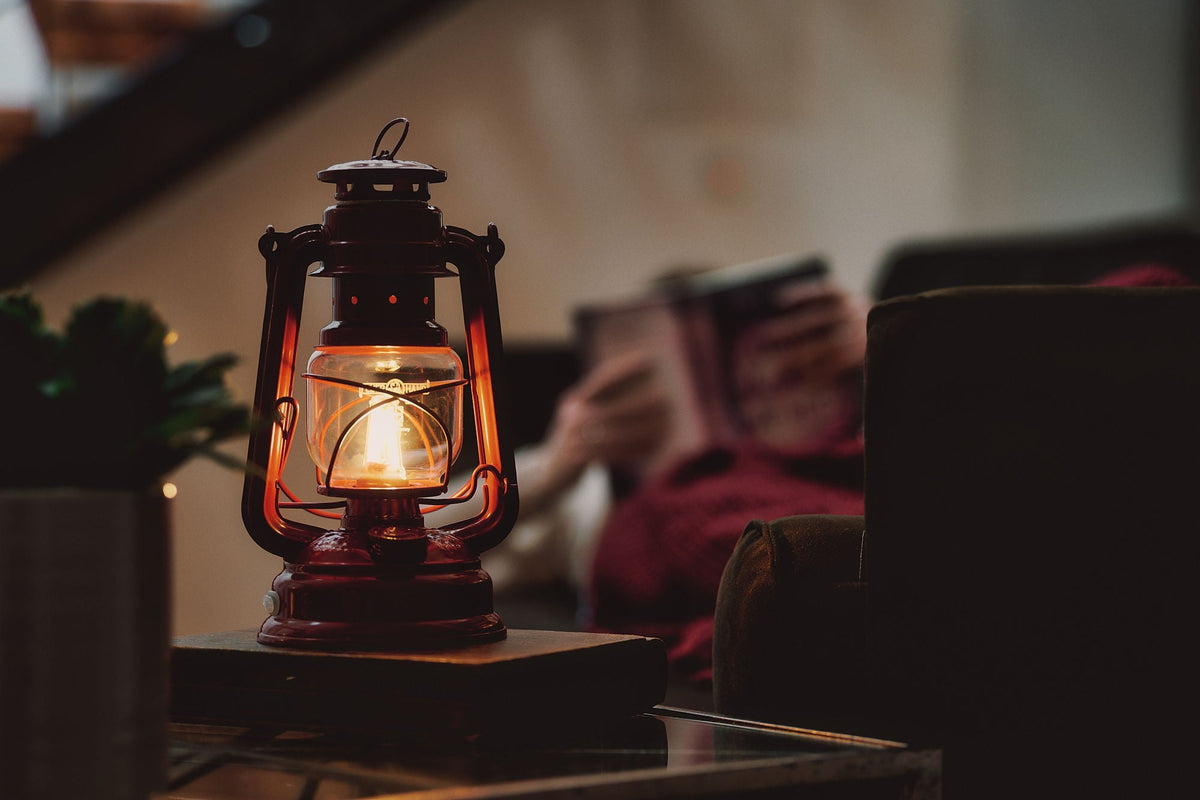
A hurricane lantern is a reliable light source for outdoor use. It works without electricity, provides warm flame light, and creates a special atmosphere in the garden, on the patio, balcony, or while camping. However, proper handling is essential for it to burn calmly and evenly.
You should proceed carefully, especially when filling, lighting, and extinguishing it. A hurricane lantern uses fuel and a real flame. When used correctly, it is simple, durable, and reliable. In this guide, you will learn step by step how to safely prepare, fill, light, and extinguish your hurricane lantern.
Table of contents
How does a hurricane lantern work?
Before use: What you should check
Which fuel is suitable for a hurricane lantern?
Filling a storm lantern: Step by step
Lighting a Storm Lantern: The Right Way to Do It
How high should the flame be?
Set up the storm lantern safely during use
Can you move a burning storm lantern?
Extinguishing a storm lantern: The right way to do it
After use: What is important?
Common mistakes when using a storm lantern
Checklist: How to use a storm lantern correctly
Bottom line: A storm lantern is easy to use when you follow the basics
Frequently asked questions about using a storm lantern
How does a hurricane lantern work?
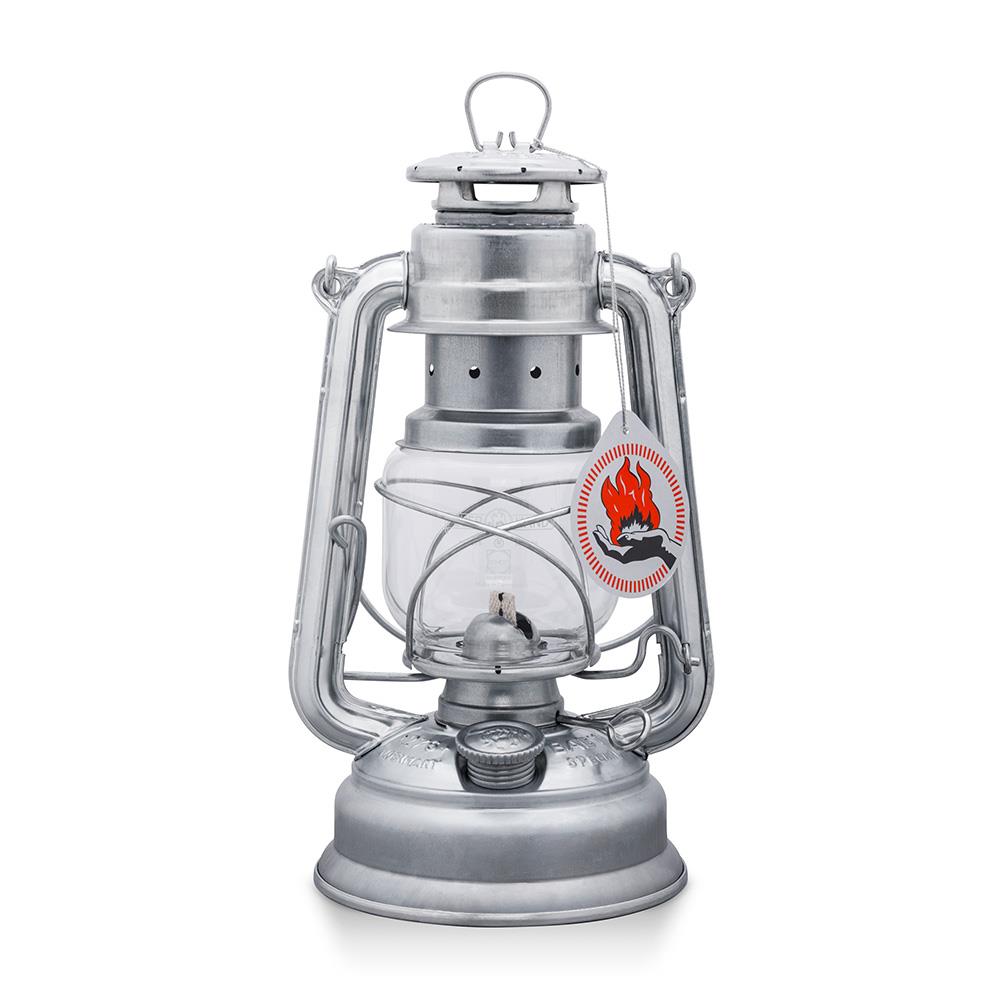
A classic hurricane lantern consists of a tank, wick, burner, glass, and air circulation system. The fuel is held in the tank and absorbed by the wick. When the wick is lit, a flame is produced. The glass protects it from the wind, while the air circulation system ensures that sufficient oxygen reaches the flame.
In a cold-air lantern such as the Feuerhand Baby Special 276, fresh outside air is directed to the flame through side air tubes. This allows the lantern to burn calmly and evenly outdoors.
If you would like to learn more about how this design works, you can find a detailed explanation in the article “What Is a Cold-Air Lantern? Design and Function Explained Simply.”
Before use: What you should check
Before filling or lighting your hurricane lantern, you should briefly inspect it. This takes only a few minutes and helps prevent soot, unsteady flames, or spilled fuel.
First, check whether the lantern is clean and dry. The tank should contain no old residue, dirt particles, or water. The glass and burner should also be free of soot and deposits.
Next, check the wick. It should sit straight, not be badly frayed, and be easy to turn up and down. If the edge of the wick is uneven, the flame may flicker or produce soot later.
The tank cap should also close tightly. Also make sure that the lantern is standing securely and that there is no visible damage to the glass, tank, or housing.
You can find more information about caring for the individual components in the article “Cleaning a Hurricane Lantern: Care for the Glass, Tank, and Burner.”
Which fuel is suitable for a hurricane lantern?
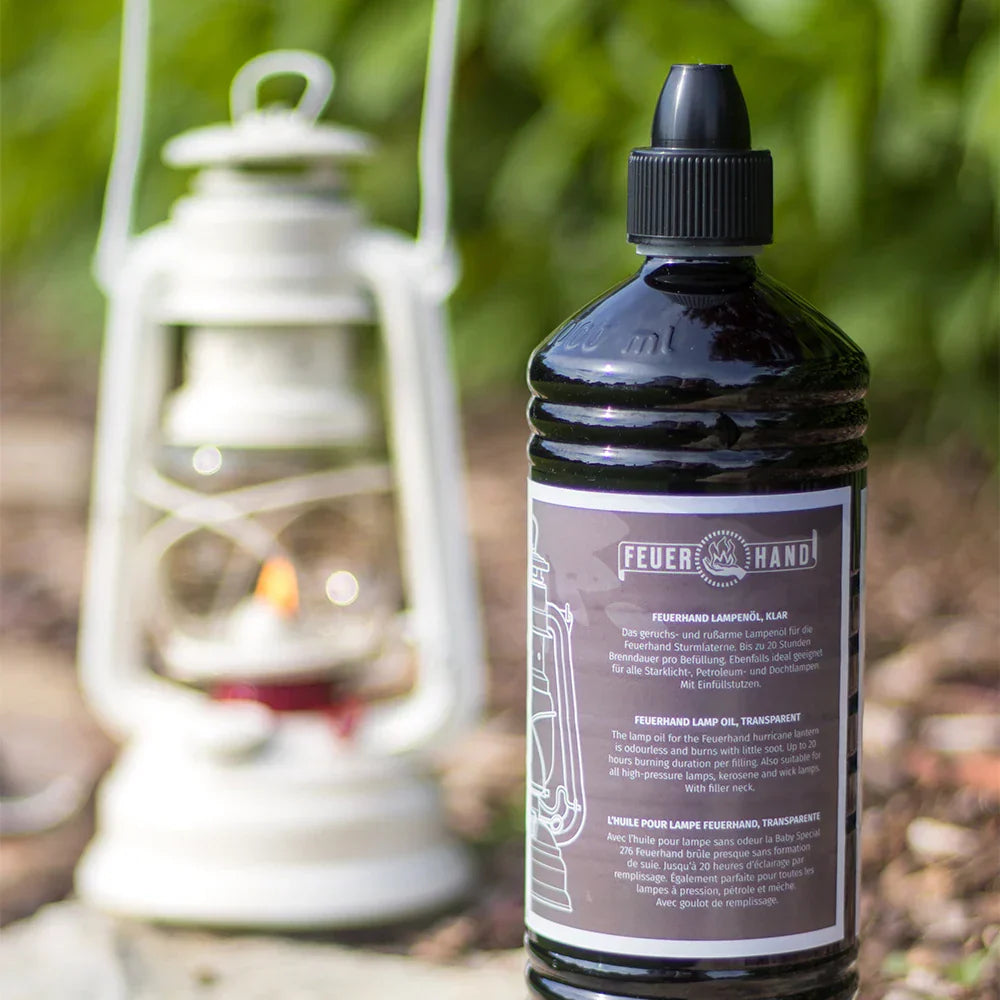
Suitable lamp oil or kerosene is generally used for classic storm lanterns. It is important that the fuel is explicitly suitable for wick lamps or storm lanterns. Unsuitable fuels can cause smoke, odors, an unsteady flame, or safety risks.
Do not use highly flammable liquids such as gasoline, methylated spirits, or other unsuitable fuels. They are not suitable for storm lanterns and can be dangerous.
Always follow the manufacturer’s instructions. The Feuerhand Baby Special 276 should only be used with a suitable fuel for storm lanterns. This helps the flame burn more steadily, protects the wick, and keeps the lantern cleaner for longer.
If you are unsure which fuel is right, the article “Which oil for a storm lantern? What you should know” provides a more detailed overview.
Filling a storm lantern: Step by step
Filling the lantern is one of the most important steps in using a storm lantern. Take a moment to do it carefully and cleanly so that no fuel spills.
1. Allow the lantern to cool completely
Only fill your storm lantern when it has completely cooled down. Never refill a lantern that is still warm or burning. Always extinguish the flame first and wait until the glass, burner, and housing are no longer hot.
2. Place the lantern securely
Place the lantern on a stable, level, and spill-resistant surface. Ideally, fill it outdoors or in a well-ventilated area. Keep the fuel bottle, cloths, and other materials within reach so you can remove spilled fuel immediately.
3. Open the tank cap
Carefully open the tank cap. Depending on the model, it is located on the side or in the lantern’s tank area. Make sure no dirt gets into the opening.
4. Slowly fill with fuel
Pour in the fuel slowly. If needed, use a small funnel to prevent spills. Do not overfill the tank. An overly full tank can cause fuel to leak, especially when the lantern is moved or held at an angle.
As a rule of thumb, fill the tank only until some space remains. This allows the fuel to expand when temperatures change without spilling.
5. Securely close the tank
Tighten the tank cap firmly, but do not use force. Then wipe away any fuel residue from the tank, housing, and surface. The lantern should be dry on the outside before you light it.
6. Allow the wick time to absorb the fuel
If the wick is new or dry, it needs some time to become fully saturated with fuel. After filling the lantern, wait a few minutes before lighting it. This is the only way to ensure that the fuel is transported evenly to the flame.
Lighting a Storm Lantern: The Right Way to Do It
Once the lantern is filled and the wick has absorbed the fuel, you can light it. Here too, calm and careful handling is important.
1. Raise the glass
On many classic storm lanterns, the glass can be raised using a lever. This provides access to the burner area so you can light the wick.
Be careful when moving the glass. It should sit properly and not become misaligned.
2. Turn the wick out slightly
Turn the wick out only a little. It should not protrude too far from the burner. If the wick is set too high, the flame will become too large and the lantern may produce soot.
A low setting is sufficient to start with. You can carefully readjust the flame later.
3. Light the wick
Light the wick with a long match or a long lighter. Do not hold your hand directly over the flame, and make sure no fuel residue is stuck to the outside of the lantern.
As soon as the wick is burning, you can lower the glass again.
4. Adjust the flame
After lighting, the flame should burn calmly and evenly. If it is very small, you can carefully turn the wick up a little. If the flame becomes too large or unsteady, or starts producing soot, the wick is set too high.
The optimal flame is steady, not too high, and burns without visible smoke.
You can find detailed instructions in the article “How to Set the Wick Correctly: This Is How Your Storm Lantern Burns Evenly.”
How high should the flame be?
The flame of a storm lantern should not be too large. Although a tall flame may initially appear brighter, it often leads to soot, higher fuel consumption, and dirty glass.
A calm, controlled flame is better. It should burn evenly and not flicker excessively. If black soot forms on the glass, this is a clear sign that the wick is set too high or that the fuel is not burning optimally.
In this case, turn the wick down slightly. Wait a moment and observe whether the flame settles. Small adjustments are usually enough.
If your storm lantern regularly smokes or produces soot, the article “Storm Lantern Smoking: Causes and Simple Solutions” will help you.
Set up the storm lantern safely during use
While the lantern is burning, it should always stand or hang securely. Choose a stable, level, heat-resistant surface. Do not place the lantern directly on table edges, unstable furniture, or in areas where it could easily be knocked over.
Keep a sufficient distance from flammable materials. These include tablecloths, curtains, plants, cushions, dry leaves, wooden decorations, and paper. Even when using the lantern on a balcony or patio, place it so that it cannot come into contact with textiles or plants.
A burning storm lantern should never be left unattended. Even though the flame is protected, it is still a real fire.
Can you move a burning storm lantern?
You should avoid moving a burning storm lantern whenever possible. The housing, glass, and burner can become hot. Fuel may also slosh around if the lantern is moved sharply or held at an angle.
If you want to move the lantern to another location, extinguish it first and let it cool down. You can then handle, transport, and reposition it safely.
Extinguishing a storm lantern: The right way to do it
Controlled handling is also important when extinguishing the lantern. A storm lantern should not be blown out, as this can create smoke and stir up hot soot or fuel vapor.
1. Turn the wick down
Slowly turn the wick down until the flame gets smaller and eventually goes out. For most classic storm lanterns, this is the cleanest method.
2. Watch the flame
Stay with the lantern briefly and check that the flame has gone out completely. Sometimes the wick continues to glow faintly. Wait until no glow is visible.
3. Let the lantern cool down
Let the lantern cool completely before touching, cleaning, or storing it. The glass and upper section may remain hot for a long time after use.
4. Do not refill immediately
Never refill the lantern immediately after extinguishing it. Always wait until it has cooled completely. Only then should you open the tank and add new fuel.
After use: What is important?
After extinguishing, the storm lantern should remain in a dry, safe place until it has cooled down. If you will not be using it for a while, you can check whether you want to leave fuel in the tank or remove it. For longer-term storage, it is often a good idea to empty the tank and store the lantern clean.
Wipe away any spilled fuel and check the glass. If it is sooty, you should clean it before using the lantern again. This keeps the light clear and the lantern ready for use.
You can find more information about proper maintenance in the article “Cleaning a Storm Lantern: Care for the Glass, Tank, and Burner.”
Common mistakes when using a storm lantern
Many problems are caused by small mistakes during use. The good news is that most of them are easy to avoid.
A common mistake is setting the wick too high. This makes the flame too large, causes the lantern to soot, and quickly turns the glass black. Unsuitable fuel can also lead to smoke, odor, or poor combustion.
Another mistake is filling a warm lantern. You should avoid this at all costs. The lantern must always be completely cool before you refill it with fuel.
A dirty burner or an old, frayed wick can also impair its function. That is why it is worth checking the lantern regularly and keeping it clean.
Checklist: How to use a storm lantern correctly
Before lighting your storm lantern, you can use this short checklist as a guide:
- The lantern is clean and undamaged
- The glass is seated correctly and is not sooty
- The wick is straight, clean, and not extended too far
- Suitable fuel has been added
- The tank is not overfilled
- Any spilled fuel has been removed
- The lantern is standing securely and at a safe distance from flammable materials
- The lantern is not left unattended while in use
When all these points are met, nothing stands in the way of a peaceful evening by lantern light.
How to use the Feuerhand Baby Special 276 correctly
The Feuerhand Baby Special 276 is a classic storm lantern and cold-blast lantern. Its design is deliberately functional: the tank, wick, glass, and airflow work together so that the flame can burn reliably outdoors.
The same basic rules apply when using it as with other high-quality storm lanterns: use suitable fuel, do not set the wick too high, let the lantern cool down completely before refilling it, and always place it securely.
Because the Baby Special 276 has been manufactured in virtually the same design for decades, it shows how uncomplicated a storm lantern can be when used correctly. It does not need complicated technology, but above all some attention to the fuel, wick, and maintenance.
Bottom line: A storm lantern is easy to use when you follow the basics
Using a storm lantern correctly is not complicated. The key steps are to add suitable fuel, let the wick soak briefly, light the flame in a controlled manner, adjust it correctly, and extinguish the lantern safely after use.
If you ensure a stable position, sufficient distance from flammable materials, and a clean lantern, you will get reliable, warm light outdoors. This makes the storm lantern a long-lasting companion for the garden, patio, balcony, or camping.
The Feuerhand Baby Special 276 represents precisely this simple, proven function: light without electricity, robust construction, and an atmosphere that makes evenings spent outdoors together particularly special.
Frequently asked questions about using a storm lantern
How do you fill a storm lantern correctly?
A storm lantern should only be filled when it is extinguished and completely cool. Open the tank, slowly add suitable fuel, and do not overfill it. Then close the tank securely and wipe away any fuel residue on the outside.
How do you light a storm lantern?
Raise the glass, turn the wick up slightly, and light it with a long match or lighter. Then lower the glass again and adjust the flame using the wick height.
How do you extinguish a storm lantern?
Slowly turn the wick down until the flame becomes smaller and goes out. Do not blow out the flame. Then wait until the lantern has cooled completely.
Why does my storm lantern soot after being lit?
The wick is usually set too high or cut unevenly. Unsuitable fuel or a dirty burner can also cause the lantern to soot.
Can you refill a storm lantern when it is still warm?
No. A storm lantern may only be refilled when it has cooled completely. This reduces safety risks and prevents the fuel from coming into contact with hot components.
Can you use a storm lantern on a balcony?
Yes, in principle, a storm lantern can be used on a balcony if it is placed securely, kept at a sufficient distance from flammable materials, and not left burning unattended. It should not be used in strong winds or very confined spaces.
How long does the wick need to soak before the first lighting?
If the wick is new or dry, it should be given a few minutes after filling to fully absorb the fuel. Only then should the lantern be lit.