



A cold-air lantern is a special form of storm lantern. It provides light without electricity, protects the flame from the wind, and uses a well-designed system of tank, wick, glass, and air circulation. This interplay ensures that the lantern can burn reliably and evenly outdoors.
The term may initially sound technical. However, it is based on a simple principle: a cold-air lantern directs fresh air from outside to the flame so that it can burn cleanly and steadily. This distinguishes it from other types of lanterns and makes it one of the most proven designs of classic storm lanterns to this day.
In this guide, you will learn what a cold-air lantern is, how it is constructed, and how its air circulation works.
Table of contents
What is a cold-air lantern?
Is a cold-air lantern the same as a storm lantern?
How is a cold-air lantern constructed?
How does a cold-blast lantern work?
Why is it called a cold-blast lantern?
What is the difference between a cold-blast lantern and a hot-blast lantern?
What are the advantages of a cold-air lantern?
Where can a cold-air lantern be used?
What should you keep in mind when using it?
Why does a cold-air lantern sometimes smoke?
Cold-air lantern or LED lantern?
Conclusion: A cold-air lantern is simple technology with a powerful effect
Frequently asked questions about cold-air lanterns
What is a cold-air lantern?
A cold-air lantern is an oil-powered storm lantern in which fresh air is directed from outside to the flame. The flame is protected behind a glass cylinder. Oxygen reaches the burner through side air tubes, allowing the wick to burn evenly.
The name “cold-air lantern” does not mean that the air reaches the flame cold. Rather, it describes the use of fresh outside air instead of already depleted exhaust gases being directed back to the flame. As the air passes through the lantern, it is preheated before reaching the burner.
This design makes the cold-air lantern particularly suitable for outdoor use. It is robust, independent of electricity, and protects the flame better than an open light source.
If you first want to learn generally what defines a storm lantern, the article “What Is a Storm Lantern? Function, Benefits, and Areas of Use” provides a suitable introduction.
Is a cold-air lantern the same as a storm lantern?
A cold-air lantern is a specific type of storm lantern. The term storm lantern generally describes a lantern whose flame is protected from the wind. Cold-air lantern more specifically describes how air is directed inside the lantern.
This means that every cold-air lantern is a storm lantern, but not every storm lantern is automatically a cold-air lantern. The difference lies in the construction and in how oxygen reaches the flame.
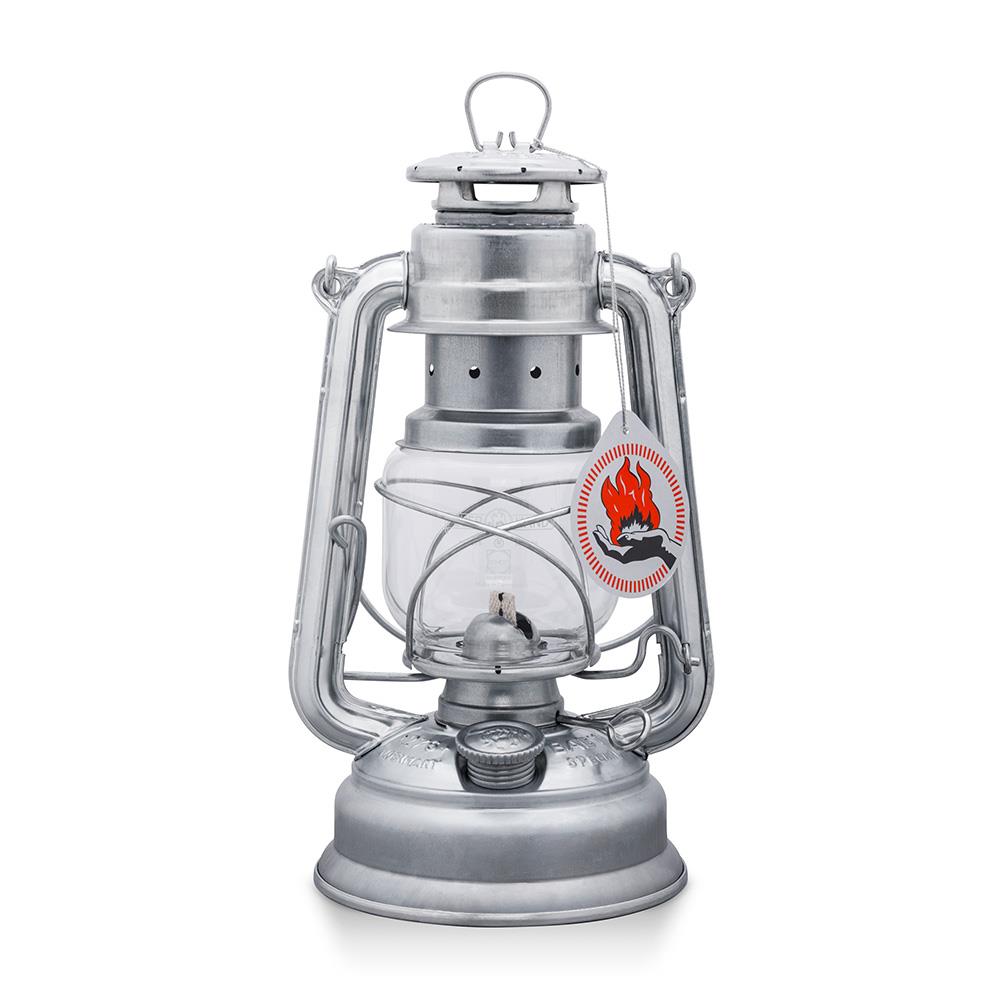
The Feuerhand Baby Special 276 is also a cold-air lantern. Its construction follows a tried-and-tested principle that has remained virtually unchanged for decades.
How is a cold-air lantern constructed?
A cold-air lantern consists of several components that work together to provide light, air supply, and protection for the flame. Each element has a specific function.
The tank
The tank is located in the lower part of the lantern. This is where the fuel is added. Traditional cold-air lanterns generally use suitable lamp oil or kerosene. The fuel remains in the tank and is transported upward to the flame through the wick.
A clean tank is important for the lantern to function reliably. Residue, incorrect fuel, or impurities can impair combustion.
You can find more information about the right fuel in the article “Which Oil for a Storm Lantern? What You Should Know.”
The wick
The wick connects the fuel in the tank to the flame. It absorbs the fuel and transports it upward to the point of combustion, where the fuel is ignited.
The height of the wick affects the flame. If the wick is turned up too far, the lantern may produce soot. If it is set too low, the flame will burn very small or unevenly. The correct wick height is therefore essential for an even light.
You can find detailed instructions in the article “How to Adjust the Wick Correctly: How to Make Your Storm Lantern Burn Evenly.”
The burner
The burner holds the wick and is the area where the flame is produced. A small rotary mechanism usually allows you to move the wick up or down. This lets you adjust the size of the flame.
The burner should be kept clean so that air can circulate properly. Deposits or residue can cause the flame to flicker, smoke, or burn unevenly.
The glass
The glass protects the flame from wind and other external influences. At the same time, it allows the light to shine outward evenly. In a storm lantern, the glass is therefore not merely a decorative element but an important functional component.
If the glass is heavily sooted or dirty, the light appears dimmer. Dirt can also indicate that the wick is incorrectly adjusted or that the fuel is not burning optimally.
You can find more information about care in the article “Cleaning a Storm Lantern: Care for the Glass, Tank, and Burner.”
The air tubes
The side air tubes are a key feature of the cold-air lantern. They direct fresh air to the flame. Air enters the system from outside, is preheated along the way, and eventually reaches the burner.
This controlled airflow ensures that the flame is supplied with oxygen and can burn evenly. Without this air supply, combustion would not function as well.
The chimney
The upper part of the lantern is often referred to as the chimney or flue. This is where warm exhaust air can escape upward. At the same time, this area is part of the airflow system that creates the draft in the lantern.
The interaction of the chimney, air tubes, burner, and glass creates stable combustion. This system is precisely what makes the cold-blast lantern so reliable.
How does a cold-blast lantern work?
The function of a cold-blast lantern can be explained in a few steps.
First, the fuel is poured into the tank. The wick absorbs the fuel and carries it to the combustion point. When the wick is lit, a flame is produced. For this flame to burn steadily, it needs oxygen.
In a cold-blast lantern, fresh outside air is directed to the flame through the lantern’s design. The air flows downward through the side tubes to the burner. Along the way, it is preheated by the lantern’s heat. At the burner, the air meets the fuel vapor at the wick and supports combustion.
The warm exhaust air then rises and escapes through the chimney. This creates a continuous flow of air. Fresh air enters, spent air can escape, and the flame remains stable.
In short: A cold-blast lantern works because the fuel, wick, fresh air, and exhaust air work together in a closed system.
Why is it called a cold-blast lantern?
The term “cold-blast lantern” refers to the way air is supplied. The lantern uses fresh outside air and directs it specifically to the flame. Although this air is warmed as it passes through the lantern, it originally comes from outside.
This distinguishes the cold-blast lantern from types of lanterns in which some of the already heated or spent air is fed back to the flame.
The term can therefore be somewhat misleading. It does not mean that cold air hits the flame directly. What matters is that fresh air enters the system and supports combustion.
What is the difference between a cold-blast lantern and a hot-blast lantern?
In a cold-blast lantern, fresh outside air is directed to the flame. The exhaust air escapes upward through the chimney. This gives the flame oxygen-rich air, allowing it to burn brightly and evenly.
In a hot-blast lantern, by contrast, some of the warm exhaust air is fed back to the flame and mixed with fresh air. This changes the combustion, and the light output may also differ.
For modern use, the most important point is this: The cold-blast lantern is a proven design for classic storm lanterns and is particularly suitable for outdoor use.
If you're unsure how a cold-blast lantern, kerosene lamp, oil lamp, and storm lantern differ, the article “Kerosene Lamp, Oil Lamp, or Storm Lantern: What’s the Difference?” will help.
What are the advantages of a cold-air lantern?
A cold-air lantern offers several advantages that continue to make it a popular outdoor light source.
It works without electricity
A cold-air lantern requires neither a power outlet nor a battery. It is fuel-operated and therefore provides light independently of electrical power. This makes it especially practical for gardens, terraces, balconies, camping, or places without permanent lighting.
It protects the flame from the wind
The glass and housing protect the flame better than an open light source. This makes a cold-air lantern particularly suitable for outdoor use. It remains usable even when a light breeze picks up.
It provides warm, lively light
The light of a cold-air lantern is produced by a real flame. As a result, it appears warm, calm, and atmospheric. This light creates a special ambiance, especially during evenings spent outdoors together.
It is robust and durable
Cold-air lanterns have a mechanical design and do not require complicated technology. Many components can be cleaned, maintained, or replaced. This makes them a durable source of light when used and cared for properly.
The Feuerhand Baby Special 276 illustrates this principle particularly well. It is still manufactured almost unchanged to this day, representing a form of functionality that has proven itself over generations.
Where can a cold-air lantern be used?
A cold-air lantern is primarily suitable for outdoor use. It provides light where there is no power outlet while also creating ambiance.
In the garden
In the garden, a cold-air lantern can subtly illuminate paths, seating areas, or tables. It provides orientation without being glaring, and is especially well suited to long summer evenings or quiet autumn moments outdoors.
On the terrace
On the terrace, it provides light exactly where you need it. Beside the seating area, on the table, or in a sheltered corner, it creates a warm ambiance and makes the outdoor space more inviting.
On the balcony
A cold-air lantern can also be used on a balcony, provided it is placed securely and kept at a sufficient distance from flammable materials. Small outdoor areas in particular benefit from flexibly positioned lighting.
While camping
When camping, a cold-air lantern is a practical source of light for outdoor use. It works independently of electricity and provides reliable light at the campsite table or in front of the tent. However, a fuel-operated lantern should not be used inside enclosed tents or sleeping areas.
At garden parties and evenings together
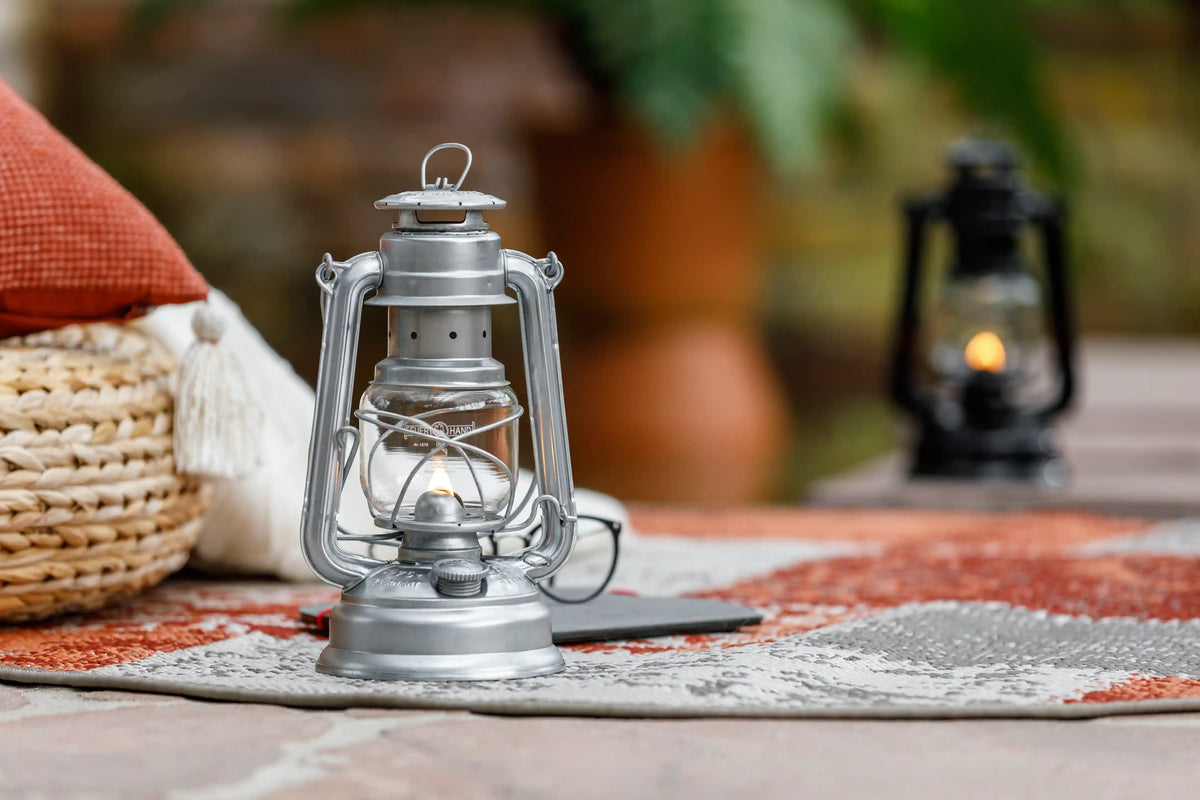
A cold-air lantern is particularly well suited to garden parties, outdoor dinners, or cozy evenings on the terrace. It is not just a light source but also part of the atmosphere. Its warm light is perfect for moments when you want the evening to unfold at a slower pace.
You can also find suitable inspiration later in the articles “Garden Party Lighting: Ideas for Atmospheric Evenings” and “Power-Free Terrace Lighting: Cozy Outdoor Illumination.”
What should you keep in mind when using it?
Although a cold-air lantern is sturdy and reliable, it should always be used with care. Because it uses a real flame, choosing a safe location and handling it correctly are important.
Always place the lantern on a stable, level, heat-resistant surface. Keep it away from flammable materials such as tablecloths, curtains, dry leaves, plants, wood, or upholstery. Never leave a burning lantern unattended.
Care is also important when filling the lantern. Add fuel only when the lantern is extinguished and completely cool. Use only suitable fuel and do not overfill the tank. After lighting it, avoid moving the lantern while it is hot.
You can find detailed step-by-step instructions in the article “How to Use a Storm Lantern Correctly: Filling, Lighting, and Extinguishing.”
Why does a cold-air lantern sometimes smoke?
When a cold-air lantern smokes, it is often because the wick is set too high, the burner is dirty, or the wrong fuel is being used. An unevenly trimmed wick can also prevent the flame from burning cleanly.
In many cases, the problem can be fixed easily. The wick should be visible by only a few millimeters and should burn evenly. The glass and burner should be cleaned regularly. You should also use only the fuel suitable for the lantern.
You can find more information in the article “Storm Lantern Smoking: Causes and Simple Solutions.”
Cold-air lantern or LED lantern?
A cold-air lantern is the right choice if you are looking for genuine flame light, operation without electricity, and a classic outdoor light source. It brings a warm, lively ambiance outdoors and works independently of a battery or power outlet.
An LED lantern is a better choice if you want to avoid an open flame or are looking for a simple electric light source. It can also be useful in places where a fuel-powered lantern is unsuitable.
The Feuerhand Baby Special 276 is available both as a classic storm lantern and as an LED lantern. This preserves its characteristic shape while allowing you to choose between a real flame and modern LED functionality depending on how you intend to use it.
Find out more in the article “LED Lantern or Storm Lantern: Which Baby Special is right for you?”.
Conclusion: A cold-air lantern is simple technology with a powerful effect
A cold-air lantern is a classic storm lantern with a carefully designed airflow system. It uses fresh outdoor air, guides it to the flame through side tubes, and lets the warm exhaust air escape through the chimney. This creates an even airflow that keeps the flame steady.
Its design is simple but effective: the tank, wick, burner, glass, air tubes, and chimney work together to make the lantern a reliable source of outdoor light.
That is precisely why this principle has stood the test of time. A cold-air lantern does more than provide light—it creates atmosphere. It brings the warm glow of a flame to the garden, patio, balcony, or campsite and accompanies shared moments in a calm, timeless way.
The Feuerhand Baby Special 276 embodies this exact principle: robust construction, light without electricity, and a function that has remained easy to understand and reliable for generations.
Frequently asked questions about cold-air lanterns
What does cold-air lantern mean?
A cold-air lantern is a storm lantern that directs fresh outdoor air to the flame. This air is guided through the lantern’s construction and supports combustion.
Is a cold-air lantern a storm lantern?
Yes, a cold-air lantern is a specific type of storm lantern. It differs from other types of lanterns in the way air flows through it.
Why is it called a cold-air lantern?
The name refers to the use of fresh outdoor air. This air is preheated on its way to the flame, but it originally comes from outside.
What is the difference between a cold-air lantern and a petroleum lamp?
A petroleum lamp is defined by its fuel. A cold-air lantern is defined by its design and airflow. A cold-air lantern can be operated with petroleum if it is designed for it.
Where can a cold-air lantern be used?
A cold-air lantern is especially suitable for outdoor use, for example in the garden, on the patio, on the balcony, or while camping. A fuel-burning lantern should not be used in enclosed spaces or tents.
Why does a cold-air lantern flicker or produce soot?
Common causes include a wick set too high, unsuitable fuel, a dirty burner, or an unevenly trimmed wick. Cleaning and setting the wick to the correct height usually help quickly.
