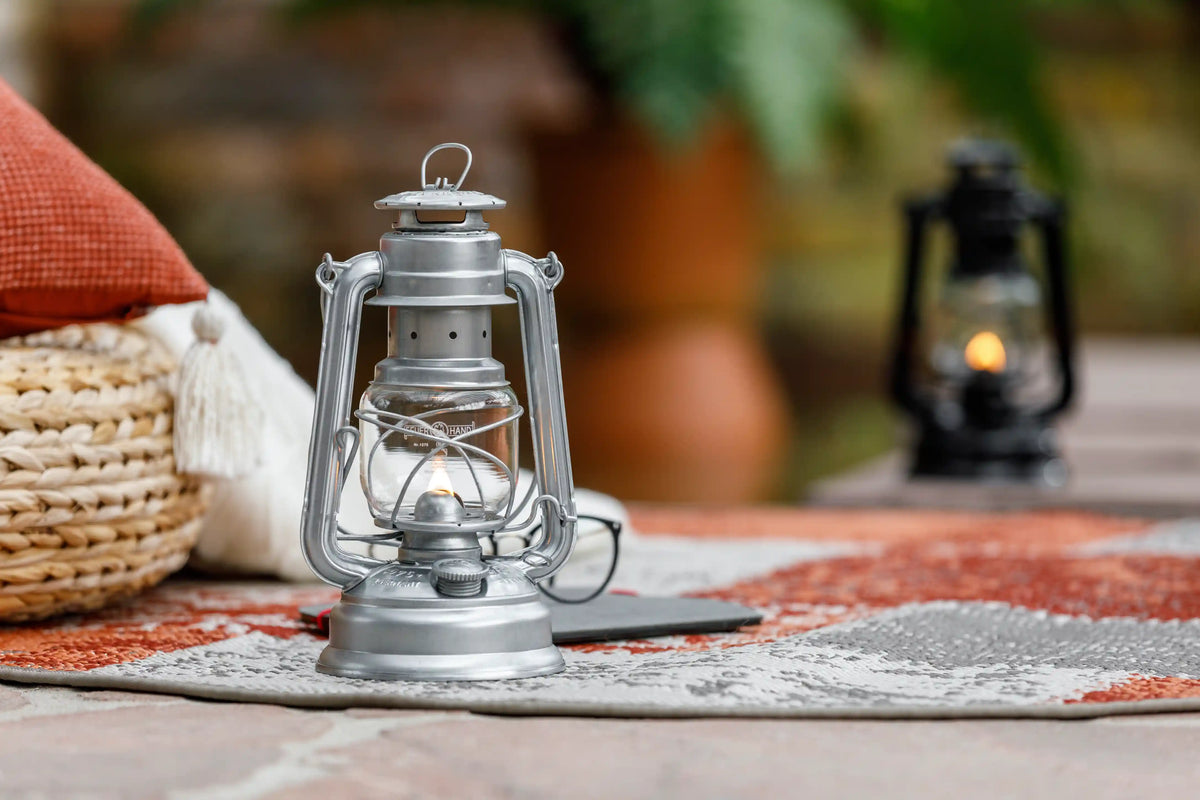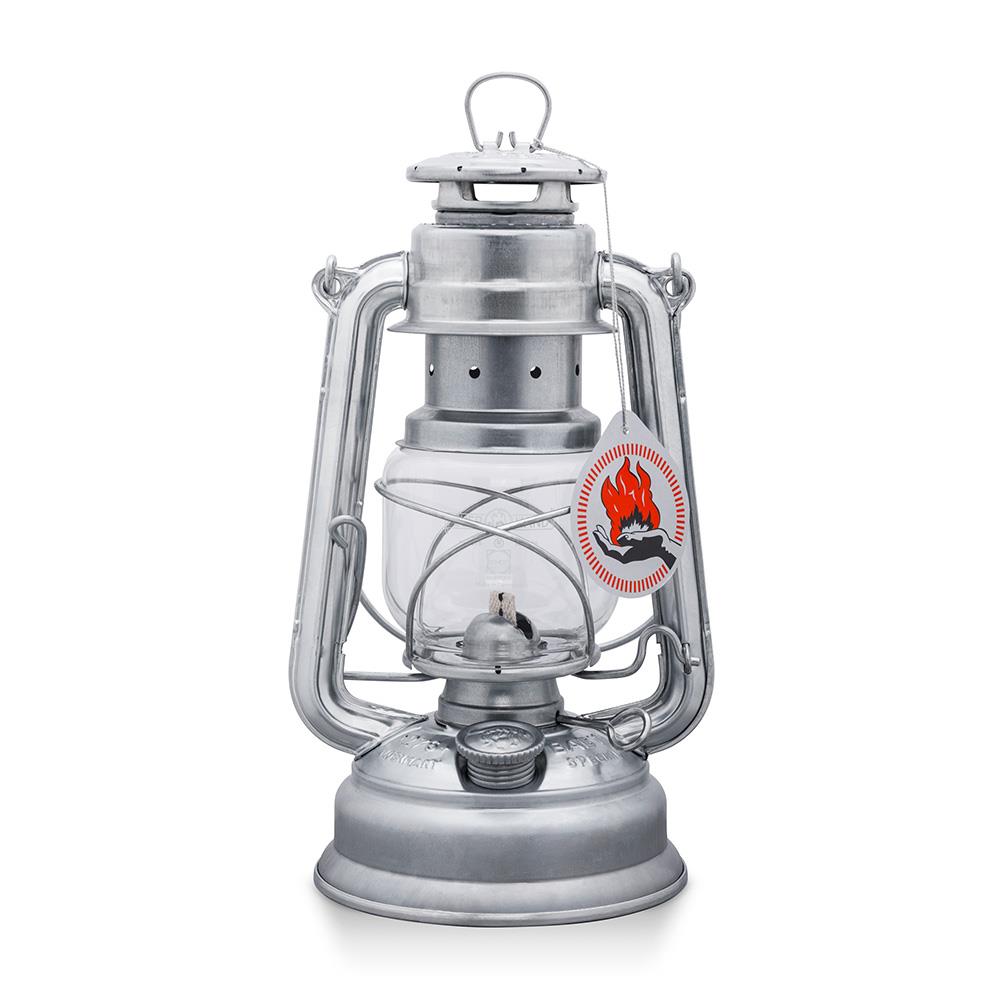

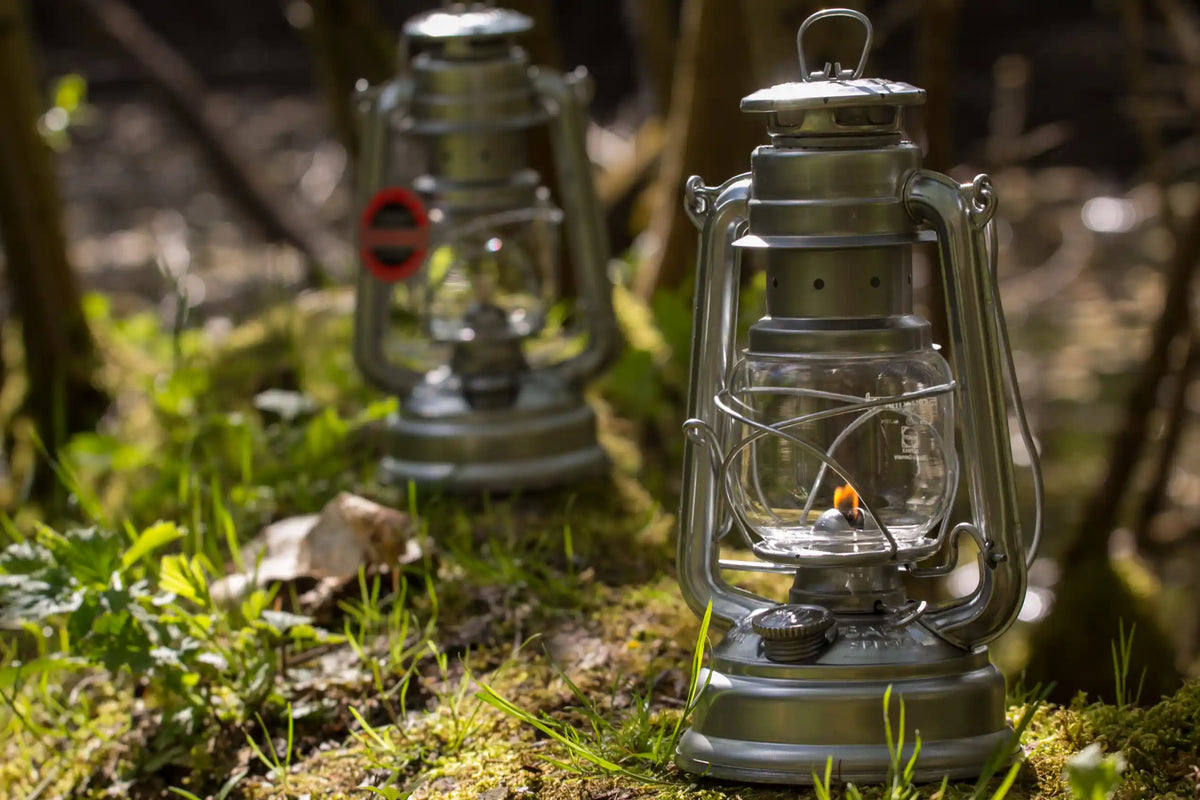
Kerosene lamp, oil lamp, storm lantern: Many of these terms are used almost interchangeably in everyday life. They often refer to a lamp with a real flame, warm light, and a fuel tank. Nevertheless, there are differences. Not every oil lamp is a storm lantern, and not every kerosene lamp is automatically suitable for outdoor use.
Anyone looking for a suitable lamp for the garden, patio, balcony, or camping should therefore know what the individual terms mean. In this guide, you will learn how kerosene lamps, oil lamps, and storm lanterns differ, how they work, and which option makes sense for each area of use.
Table of contents
Why are these terms often confused?
What is an oil lamp?
What is a kerosene lamp?
What is a storm lantern?
The most important difference: term, fuel, or design
Kerosene lamp, oil lamp, and storm lantern compared
Common misconceptions about kerosene lamps, oil lamps, and storm lanterns
Conclusion: The difference lies in design and use
Frequently asked questions about kerosene lamps, oil lamps, and storm lanterns
Why are these terms often confused?
The terms kerosene lamp, oil lamp, and storm lantern are closely related because they can all operate with liquid fuel and a wick. The fuel is drawn from a tank or container, transported through the wick to the flame, and burned there. This creates a warm, vibrant light.
The difference lies primarily in the design, the fuel used, and the intended purpose. Oil lamp is the most general term. Kerosene lamp specifies more precisely which fuel is used. A storm lantern, on the other hand, is a specific design developed especially for outdoor use.
If you first want to understand what fundamentally defines a storm lantern, the article “What Is a Storm Lantern?” provides a detailed introduction to its function, benefits, and areas of use.
What is an oil lamp?
An oil lamp is a lamp powered by oil. The term is very general and encompasses many different types of lamps. Even simple bowls containing oil and a wick can be called oil lamps. Decorative table lamps, classic wick lamps, and certain types of lanterns are also included.
The operating principle is usually simple: a wick absorbs the fuel and carries it to the flame. When the wick is lit, the oil burns slowly and produces light. Depending on the design, the flame may be open, partially protected, or completely enclosed by glass.
Today, oil lamps are often used as decorative sources of light. They can create a warm atmosphere on a table, in the garden, or on special occasions. However, many simple oil lamps are not specifically designed for wind or changing outdoor conditions. They are therefore better suited to sheltered areas.
What is a kerosene lamp?
A kerosene lamp is a lamp powered by kerosene. The term therefore primarily describes the fuel. Kerosene is a liquid fuel that was once commonly used for lamps, before electric light became standard.
Kerosene lamps also generally work with a tank, a wick, and a flame. The kerosene rises through the wick and is ignited there. Many classic kerosene lamps have a glass chimney that protects the flame and supports the airflow.
Kerosene lamps were used for a long time as a reliable source of light in homes, workshops, stables, on construction sites, or while traveling. Today, they are found primarily outdoors, while camping, or as nostalgic and atmospheric lighting.
It is important to note that a kerosene lamp is not automatically a storm lantern. It can be a table lamp, hanging lamp, or lantern. The decisive factor is not only the fuel but also the construction.
What is a storm lantern?
A storm lantern is a particularly robust lantern whose flame is protected from the wind. It usually has a tank, a wick, a glass chimney, and a carefully designed airflow system. This construction ensures that the flame can burn steadily and evenly outdoors.
Classic storm lanterns are fueled with suitable lamp oil or kerosene. They were developed to provide reliable light even under more difficult conditions. That is precisely why they were once so common in everyday life, on construction sites, during outdoor work, or while traveling.
The Feuerhand Baby Special 276 is a well-known example of a classic storm lantern. It belongs to the cold-blast lantern design and is still manufactured in Germany in virtually the same form. Its principle is intentionally simple: fuel, wick, glass, and airflow work together to produce reliable, electricity-free light.
You can find more about the exact design in the article “What Is a Cold-Blast Lantern? Design and Function Explained Simply.”
The most important difference: term, fuel, or design
The easiest way to distinguish the terms is this:
An oil lamp is the umbrella term. It describes lamps fueled by oil or an oil-like fuel.
A kerosene lamp describes a lamp fueled by kerosene. The focus is therefore on the fuel.
A storm lantern describes a specific design. The focus is on the wind-protected construction and outdoor use.
In other words: A storm lantern can be a kerosene lamp if it is fueled with kerosene. It can also generally be referred to as an oil lamp because it operates with liquid fuel. But not every oil lamp or kerosene lamp is automatically a storm lantern.
Kerosene lamp, oil lamp, and storm lantern compared
If you want to understand the differences quickly, it helps to look at the key features.
Oil lamp: the general term
The oil lamp is the broadest category. It can be very simple or decorative, use an open or protected flame, and serve a variety of purposes.
Oil lamps are typically characterized by:
- runs on liquid fuel
- wick as the connection between the fuel and the flame
- often more decorative or intended for sheltered use
- depending on the design, not necessarily wind-resistant
An oil lamp is particularly suitable if you are looking for warm light to create a calm atmosphere and want to use the lamp in a sheltered location.
Kerosene lamp: the fuel is the focus
With a kerosene lamp, the fuel is the main focus. It runs on kerosene and, depending on its design, may be made as a table lamp, hanging lamp, or lantern.
Kerosene lamps are typically characterized by:
- kerosene-powered
- tank and wick
- often with a glass chimney to guide the flame
- depending on the design, suitable for indoor, outdoor, or sheltered areas
A kerosene lamp is suitable if you are looking for a traditional fuel lamp and know exactly which fuel is intended for your model.
Storm lantern: made for outdoors
The storm lantern is designed for robust use and protected light. Its construction protects the flame from wind better than simple oil lamps or open flames.
Storm lanterns are typically characterized by:
- wind-protected flame
- sturdy metal body
- glass chimney
- tank and adjustable wick
- suitable for gardens, patios, balconies, and camping
- fuel-free operation
A storm lantern is particularly suitable if you want to use a reliable, atmospheric light source outdoors.
Which lamp is suitable for which purpose?
Which lamp is right for you depends on where you want to use it and what kind of light you are looking for.
For sheltered, decorative lighting moments, a simple oil lamp may be sufficient. It provides warm light on the table and is well suited to quiet, wind-protected areas.
A kerosene lamp can be a sensible choice for traditional fuel lighting, provided you use the appropriate fuel and the lamp is suitable for your intended use.
For outdoor use, a storm lantern is usually the more practical choice. It is more robustly built, its flame is better protected, and the lantern can be used flexibly on the patio, balcony, in the garden, or while camping.
So, if you are looking for a lamp for long evenings outdoors, a storm lantern is often the most suitable solution.
Why is a storm lantern particularly well suited for outdoor use?
A storm lantern was designed to provide reliable light even in the wind. Its flame sits protected behind glass, while the airflow ensures even combustion. As a result, it burns more steadily than an open flame.
This is a decisive advantage, especially outdoors. On the patio, in the garden, or while camping, conditions are constantly changing. It may become windy, the ground is not always perfectly illuminated, and light is often needed precisely where there is no power outlet.
A storm lantern provides light wherever you need it, independently of a power connection. At the same time, it creates a warm atmosphere that is especially well suited to evenings spent outdoors together.
What role does the fuel play?
The fuel is crucial to the operation of any wick lamp. It affects how steadily the flame burns, whether odors develop, and whether the lamp produces soot. That’s why you should always use only fuels suitable for your lamp.
Traditional storm lanterns often use high-quality lamp oil or kerosene. It is important to follow the manufacturer’s instructions. Unsuitable fuels can cause smoke, an unsteady flame, or safety risks.
If your storm lantern smokes or smells strongly, the problem is often not the lantern itself but a wick set too high, a dirty burner, or unsuitable fuel. You can find more information in the articles “Which Oil for a Storm Lantern?” and “Storm Lantern Smoking: Causes and Simple Solutions.”
Does the wick play a role too?
Yes, the wick is crucial for an even flame. It carries the fuel from the tank to the burner. When adjusted correctly, the flame burns steadily and cleanly. If it is set too high, the lantern may produce soot. If it is cut unevenly, the flame may flicker or burn at an angle.
That’s why it’s worth checking the wick regularly and trimming it cleanly when necessary. A good storm lantern is easy to use, but it works best when the fuel, wick, and air supply work together.
You can find detailed instructions in the article “How to Adjust the Wick Properly: This Is How Your Storm Lantern Burns Evenly.”
Storm lantern or LED lantern?
In addition to classic storm lanterns, LED lanterns with a traditional look are now also available. They are particularly suitable if you like the shape and atmosphere of a lantern but want to avoid an open flame.
A classic storm lantern is ideal for anyone looking for genuine flame light and a light source that works without electricity outdoors. It feels authentic, warm, and lively.
An LED lantern is practical if you want an uncomplicated electric light source. It can be switched on easily, often dimmed, and used wherever an open flame is unsuitable.
That is why the Feuerhand Baby Special 276 is available both as a classic storm lantern and as an LED lantern. Both versions draw on the characteristic shape of the Feuerhand lantern, but differ in how they are used. Which one is a better fit depends on whether you prefer genuine fire or an electric function.
You can find out more in the article “LED Lantern or Storm Lantern: Which Baby Special suits you?”.
Common misconceptions about kerosene lamps, oil lamps, and storm lanterns
Many uncertainties arise because these terms have evolved historically and are not always precisely distinguished in everyday use. That is why it is worth taking a brief look at the most common misconceptions.
Is every storm lantern a kerosene lamp?
Not necessarily. A storm lantern can be powered by kerosene if it is designed for it. However, the term storm lantern initially describes the design, not the fuel. What matters, therefore, is always what the manufacturer recommends for the respective model.
Is every kerosene lamp a storm lantern?
No. A kerosene lamp is a lamp powered by kerosene. It may be a storm lantern, but it does not have to be. There are also kerosene table lamps, hanging lamps, and other designs that are not specifically constructed for windy conditions or outdoor use.
Is an oil lamp the same as a storm lantern?
No, not quite. A storm lantern is a specific type of oil lamp or fuel lamp. It is built more robustly and protects the flame better from the wind. A simple oil lamp, on the other hand, can have a much simpler design.
What is the best choice for gardens, balconies, and patios?
For gardens, balconies, and patios, a storm lantern is usually the most sensible choice if you want genuine flame light. It is designed for mobile outdoor use, provides light without electricity, and creates a warm atmosphere.
For areas where an open flame is unsuitable, an LED lantern may be the better alternative. It brings the lantern look to modern usage situations and is particularly hassle-free.
Conclusion: The difference lies in design and use
Kerosene lamps, oil lamps, and storm lanterns are often confused with one another, but they do not mean exactly the same thing. An oil lamp is the umbrella term for lamps that operate with oil or liquid fuel. A kerosene lamp refers to a lamp operated with kerosene. A storm lantern refers to a particularly robust, wind-protected design for outdoor use.
That is why the storm lantern is particularly suitable for cozy evenings in the garden, on the patio, on the balcony, or while camping. It combines simple, proven functionality with warm light and an atmosphere that electric lighting can hardly replicate.
The Feuerhand Baby Special 276 demonstrates how timeless this principle is. As a classic storm lantern, it represents light without electricity, robust construction, and a design that has proven itself for generations. Knowing the difference between an oil lamp, a kerosene lamp, and a storm lantern makes it easier to find the light source that truly suits your intended use.
Frequently asked questions about kerosene lamps, oil lamps, and storm lanterns
What is the difference between an oil lamp and a kerosene lamp?
An oil lamp is the general term for lamps operated with oil or liquid fuel. A kerosene lamp is a specific type of oil lamp that uses kerosene.
What is the difference between a kerosene lamp and a storm lantern?
A kerosene lamp is defined by its fuel. A storm lantern is defined by its design. It is constructed to protect the flame better from wind, making the lantern well suited for outdoor use.
Can you operate a storm lantern with lamp oil?
Many storm lanterns can be operated with suitable lamp oil or kerosene. It is important to always follow the manufacturer's instructions and use only suitable fuels.
Which lamp is suitable for outdoor use?
A storm lantern is particularly well suited for outdoor use because its flame is protected by glass and the housing. In areas where an open flame is unsuitable, an LED lantern can be a good alternative.
Why does a kerosene lamp or storm lantern produce soot?
Soot is often caused by a wick set too high, unsuitable fuel, a dirty burner, or an unevenly trimmed wick. A clean lantern, the right fuel, and a properly adjusted flame help prevent soot.
Is a storm lantern safe?
When used correctly, a storm lantern is a reliable source of light outdoors. It should always be placed on a stable surface, kept away from flammable materials, and never left burning unattended.